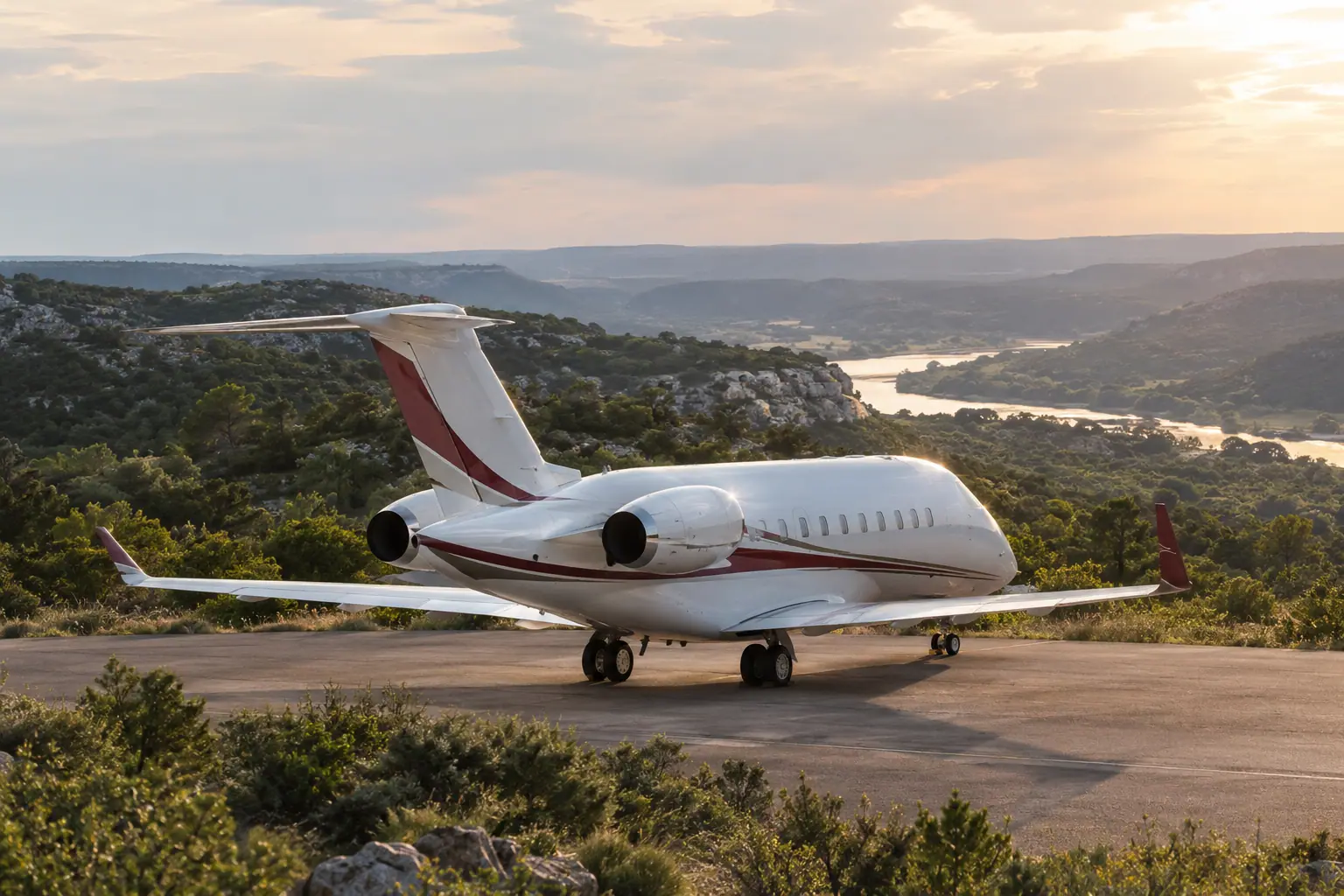
Heavy jet charter cost Austin
Heavy jet charter cost Austin quotes land between $9,500 and $14,500 per hour. A heavy jet from Dallas to Austin runs $9,500 to $14,500 for 38 minutes. Most Texas travelers use this class for transcontinental trips with 10 to 14 seats.
- $9,500–$14,500per flight-hour
- 10-14Pax
- 4,000 nmaverage reach
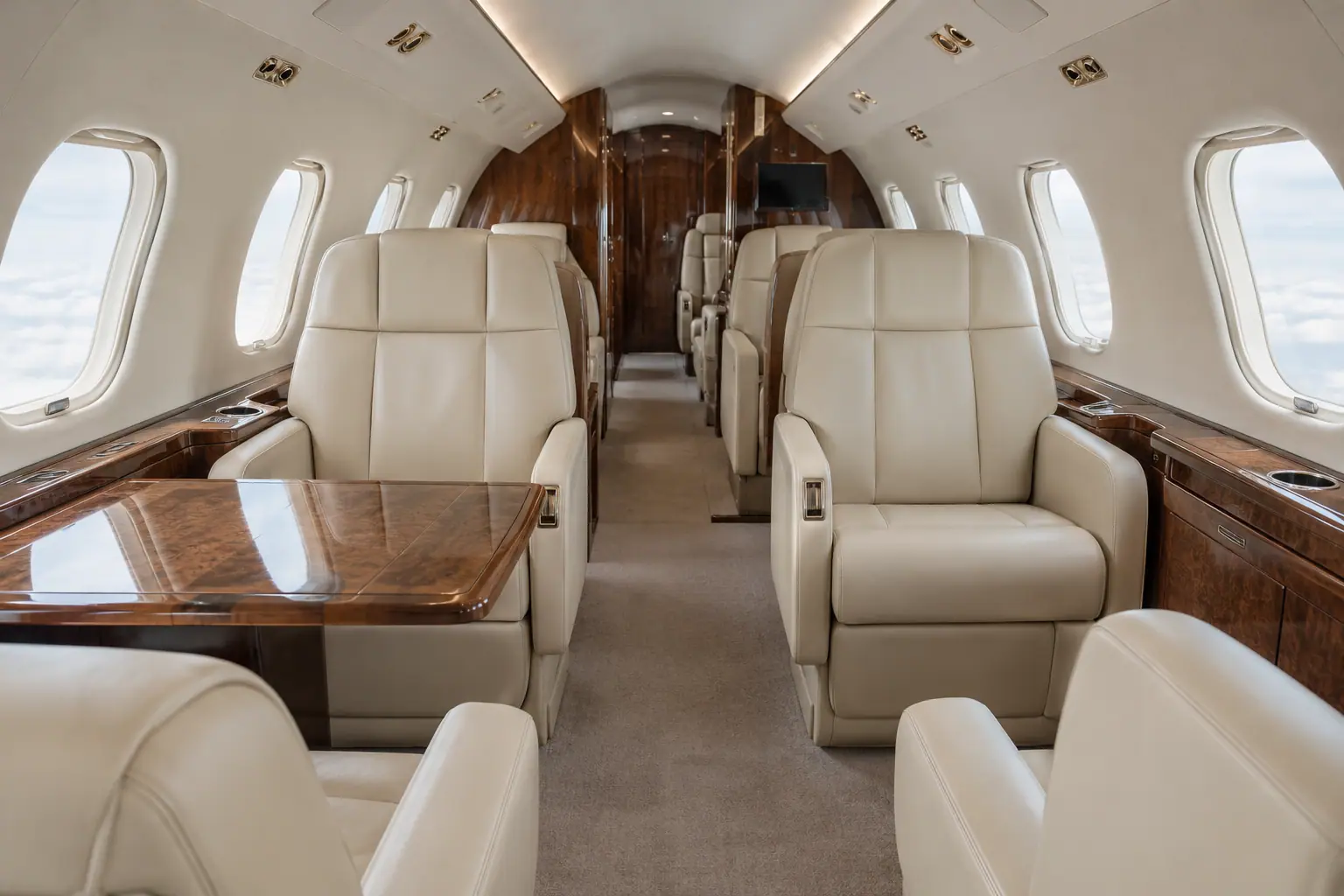
Heavy jet charter cost Austin travelers see first depends on flight hours, and the hourly band runs from $9,500 to $14,500 for the aircraft, crew, fuel and standard operating costs. Rates of $9,500 to $14,500 per hour anchor every heavy jet estimate in Austin, so almost everything else in a quote follows from that figure. Long legs spread fixed costs across more hours, which means the per-mile picture improves the farther you fly from Austin.
What you are buying is cabin. A heavy jet carries 10 to 14 passengers in a stand-up cabin with a real galley and baggage space for a group traveling a week. Cruise speeds run near 470 knots and typical range reaches about 4,000 nautical miles, which covers coast-to-coast nonstop and most of the way to Europe. Expect 10 to 14 seats and roughly 4,000 nautical miles of range from this class, so nonstop legs from Austin to either coast are routine. If your group is smaller, a midsize or super midsize usually costs less per hour on the same Texas legs.
Pricing is an estimate, not a fare. A broker collects quotes from operators who hold the certificate and operational control, then passes them along with aircraft type, tail number and terms spelled out. Operators price by the hour plus positioning, landing fees, crew overnight and international handling. Quotes from Austin heavy jet operators vary by route and date, so treat any published figure as a starting point and ask what is included before comparing numbers.
Bombardier Challenger 650
- 12 seats
- 470 kt cruise
- 4,000 nm range
- 115 cu ft baggage
The Bombardier Challenger 650 is the workhorse of the heavy class out of Austin, carrying up to 12 passengers with a cabin 6 feet 2 inches tall and 28 feet 4 inches long. It cruises near 470 knots with a range of 4,000 nautical miles and 115 cubic feet of baggage space. That combination handles Austin to New York nonstop comfortably and keeps a full group in one cabin. Ask an operator about the specific serial number and interior, since seating layouts differ between airframes even within the same model.
Dassault Falcon 900LX
- 12 seats
- 459 kt cruise
- 4,750 nm range
- 127 cu ft baggage
The Dassault Falcon 900LX seats up to 12 and offers the longest cabin in this pairing, 33 feet 2 inches long and 6 feet 2 inches tall, with 127 cubic feet of baggage. Cruise speed is about 459 knots, and its 4,750 nautical mile range opens legs that a shorter-range jet cannot fly nonstop. For Austin departures headed to Europe or deep into either coast, it is the aircraft worth asking about first. Availability is thinner than the Challenger, so book earlier if the trip date is fixed.
When a heavy jet makes sense from Austin
- Your group is eight or more and you want to sit and work rather than fold into a smaller cabin. At that size the per-seat math starts to favor a heavy aircraft, especially on a long leg where a light jet would need a fuel stop.
- You are flying Austin to New York, Boston or the West Coast nonstop and want to arrive without a stop. A heavy jet from Austin to New York covers 1,302 nautical miles in about 3 hours 13 minutes, and the range leaves room for weather and alternate planning.
- You need baggage capacity. A Challenger 650 carries 115 cubic feet and a Falcon 900LX holds 127 cubic feet, which matters for a family relocating for the season or a crew moving equipment.
- The schedule is fixed and commercial connections do not work. If a meeting in Los Angeles starts at nine in the morning, a 2 hour 43 minute heavy jet leg from Austin gets you there without a red-eye or an overnight.
What the hourly rate does not cover
The hourly rate is the core of the estimate, not the whole bill. Positioning legs to bring an aircraft to Austin, landing and handling fees, crew overnight expenses, catering and ground transportation are typically separate line items, and they can move a quote meaningfully on a short flight. On a 151 nautical mile hop to Dallas, fixed costs dominate the total, which is why short heavy jet flights rarely look cheap per mile flown.
International legs add another layer. A flight from Austin to Mexico or the Caribbean needs customs clearance through CBP, passport documentation for every passenger, and often permits arranged days ahead. The broker you book through acts as your agent under DOT Part 295 rules, while the operator holding the FAA Part 135 certificate carries operational control of the flight and its crew. TSA screening applies to charter passengers on certain aircraft sizes, so confirm the procedure when you book rather than at the ramp.
Heavy jet rates on frequent routes
Route length drives most of the quote. Austin to Dallas covers 151 nautical miles in 38 minutes, while Austin to Boston runs 1,453 nautical miles in about 3 hours 33 minutes. Below are current heavy jet estimates on routes Austin travelers actually fly, priced as ranges rather than single figures.
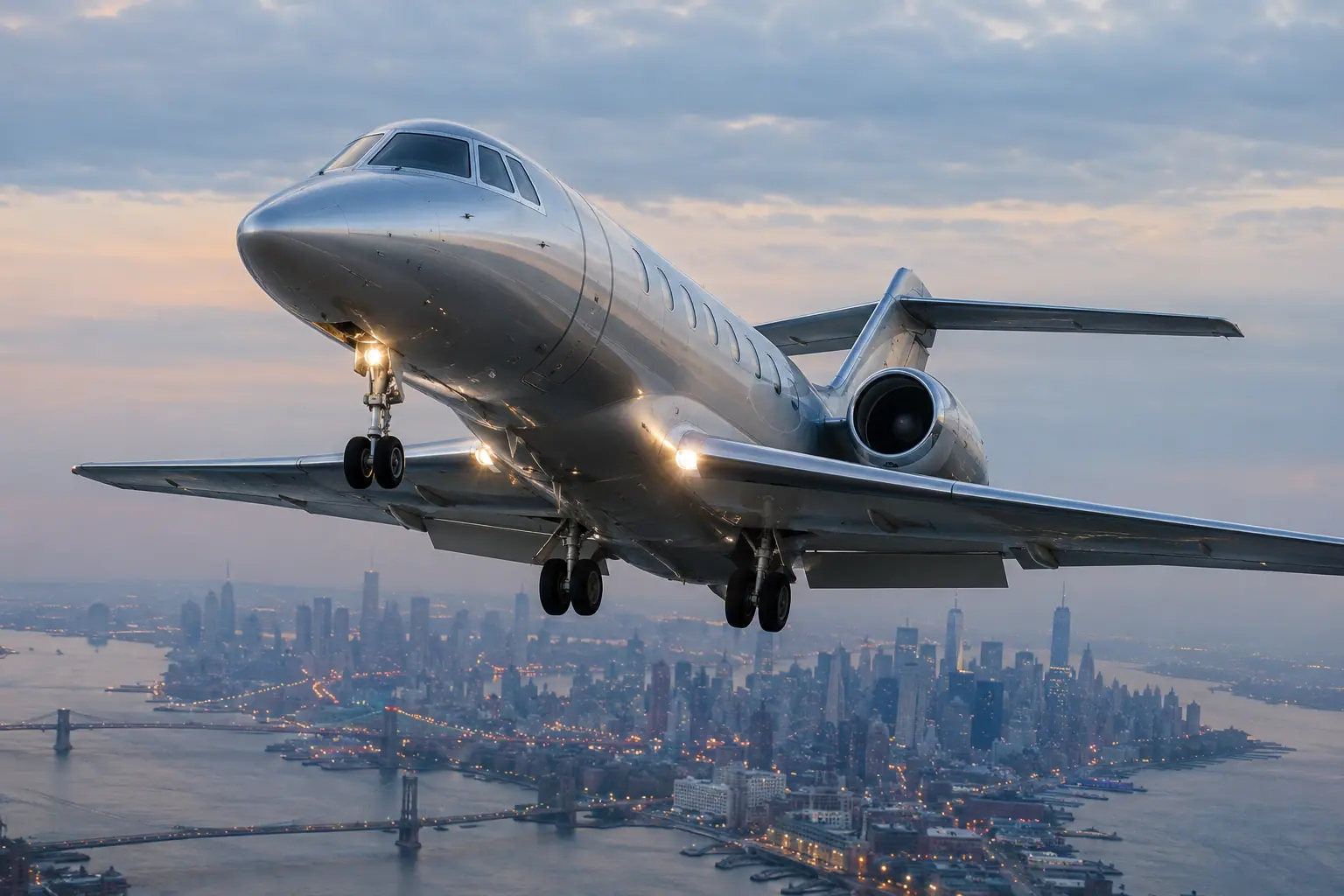
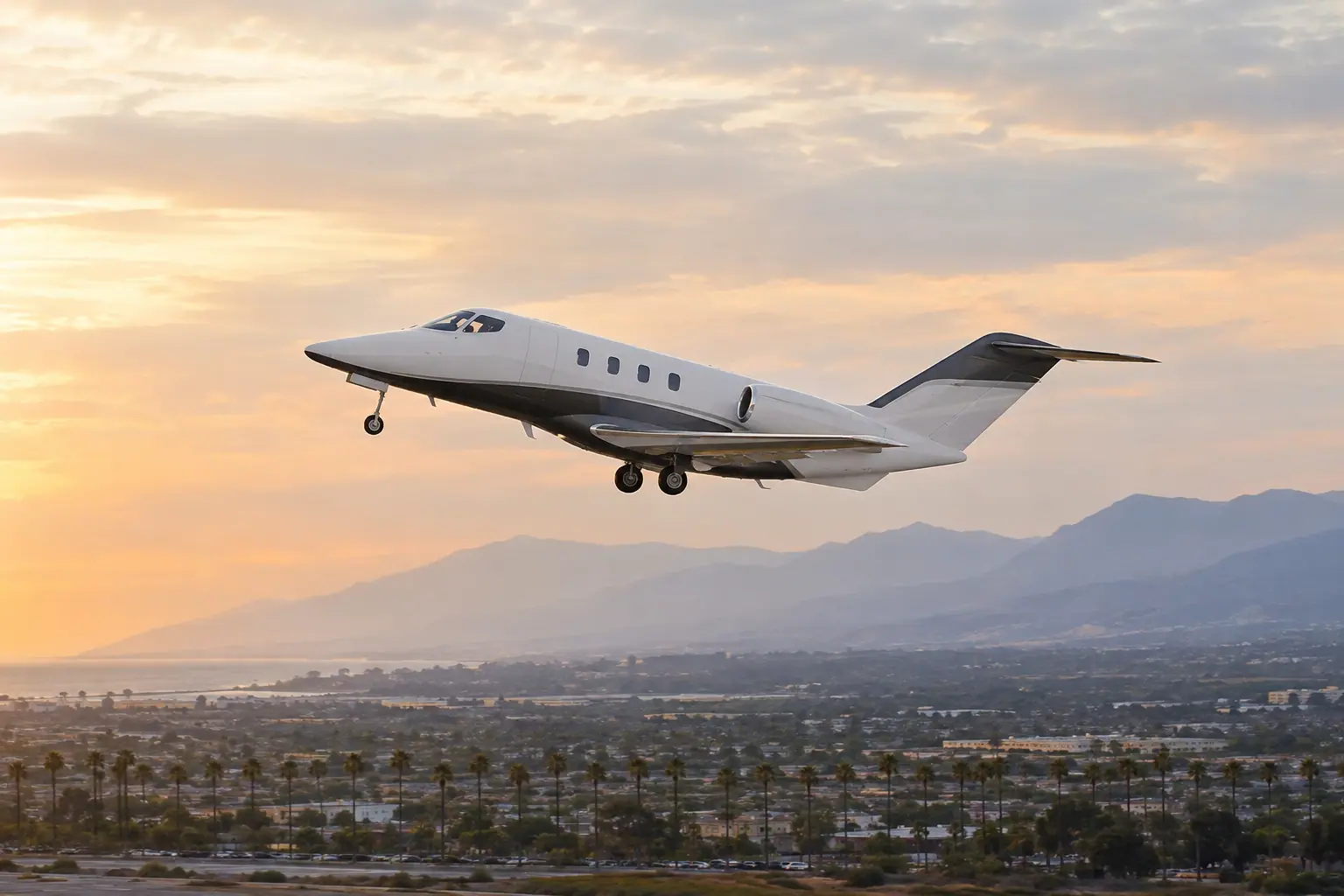
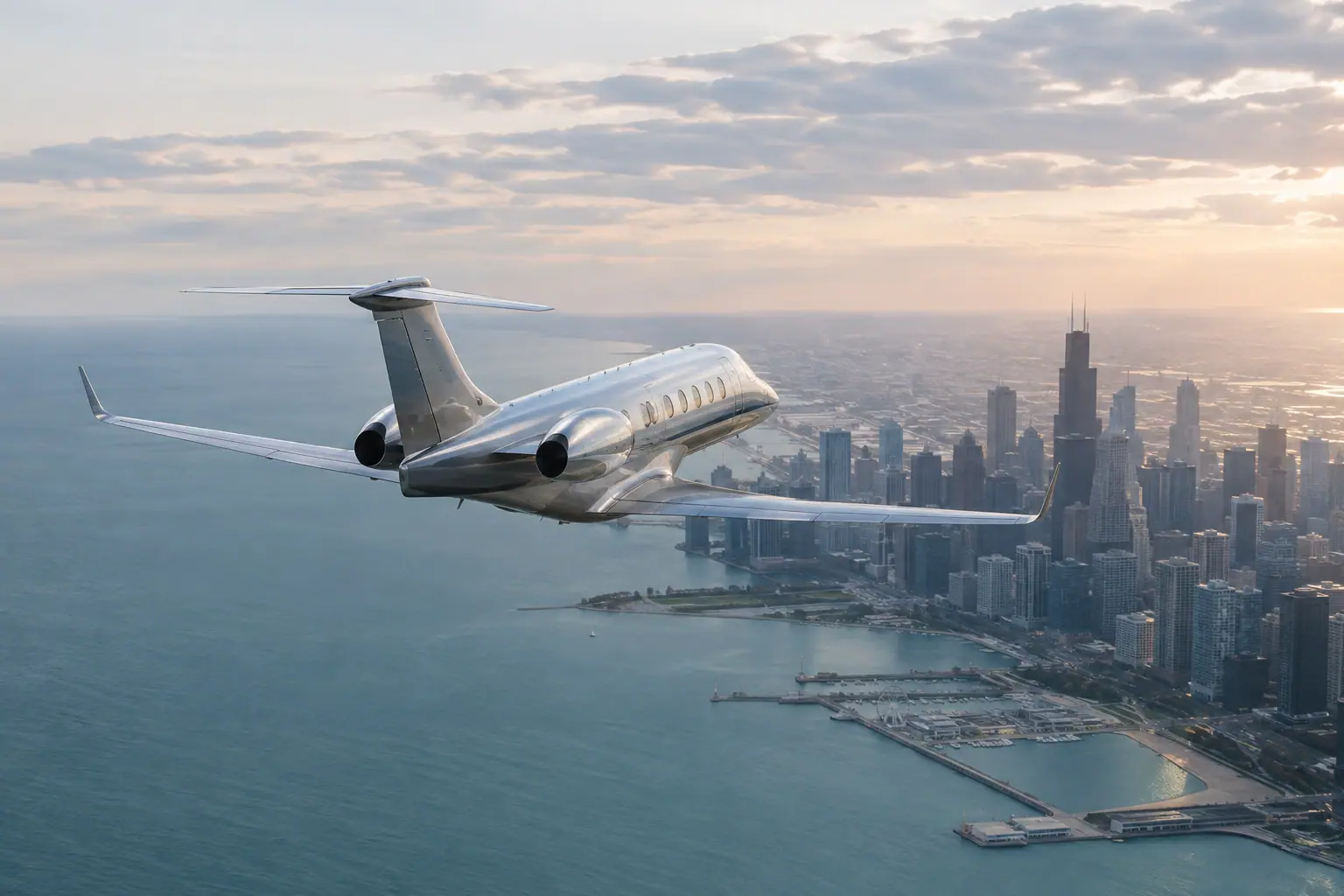
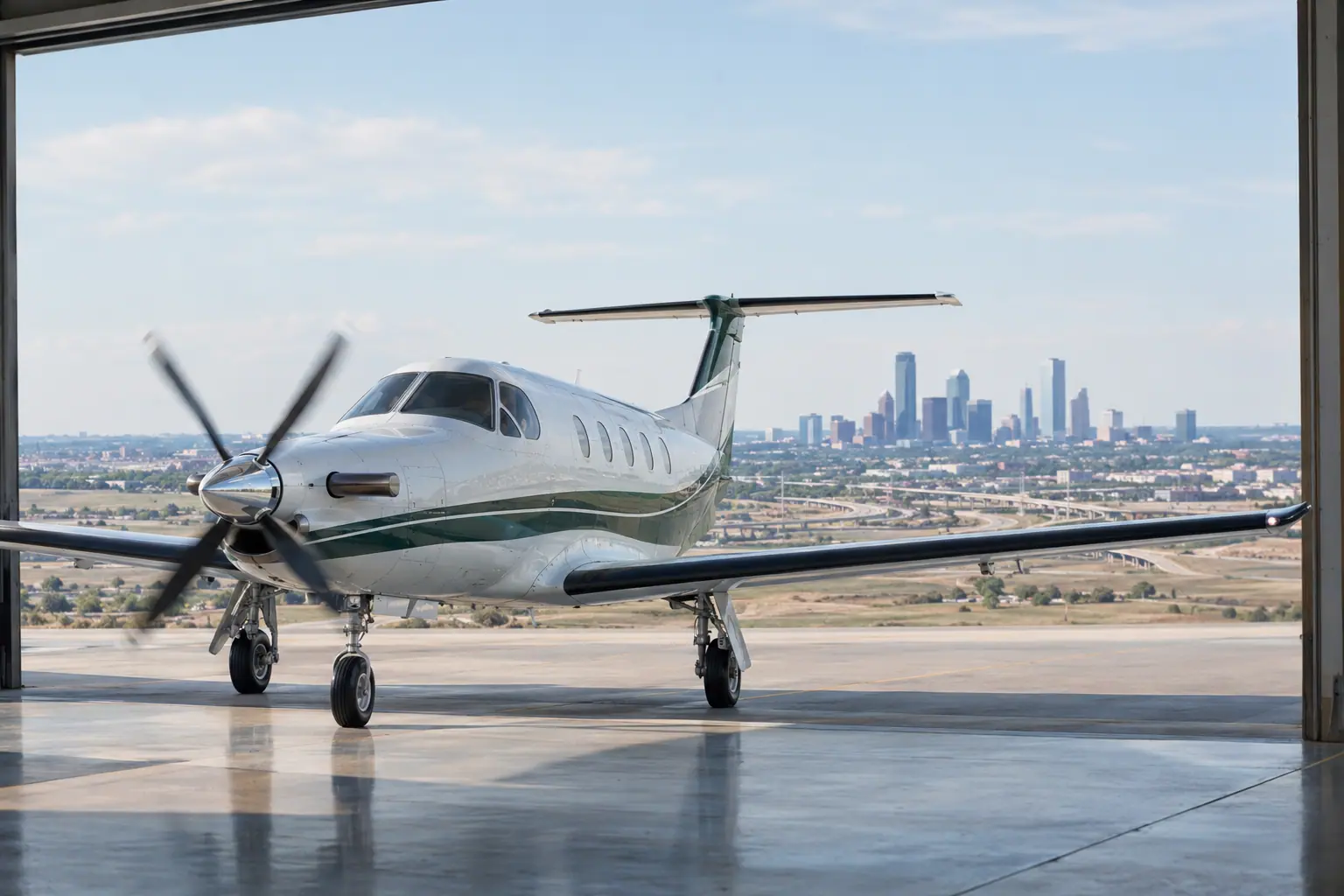
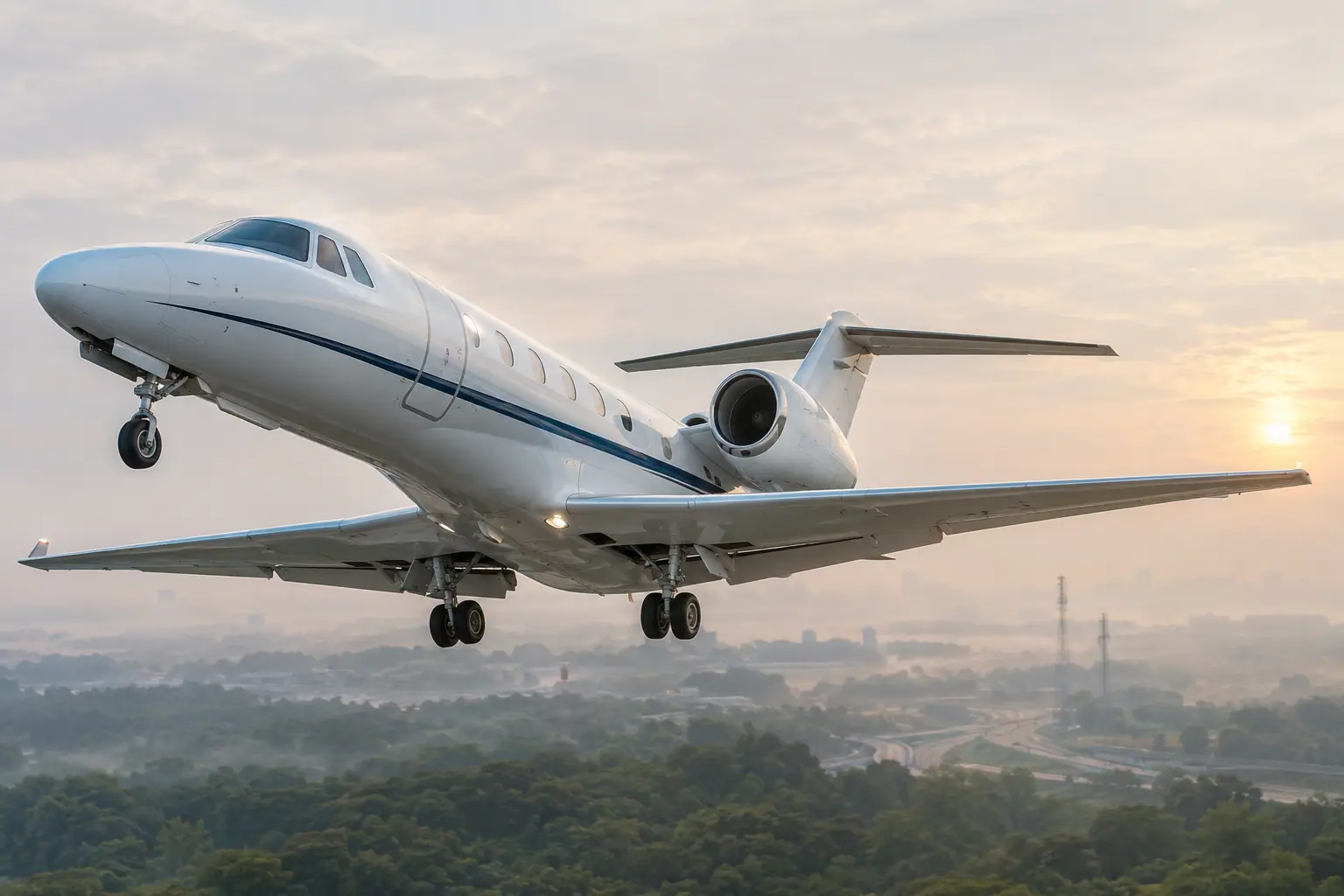
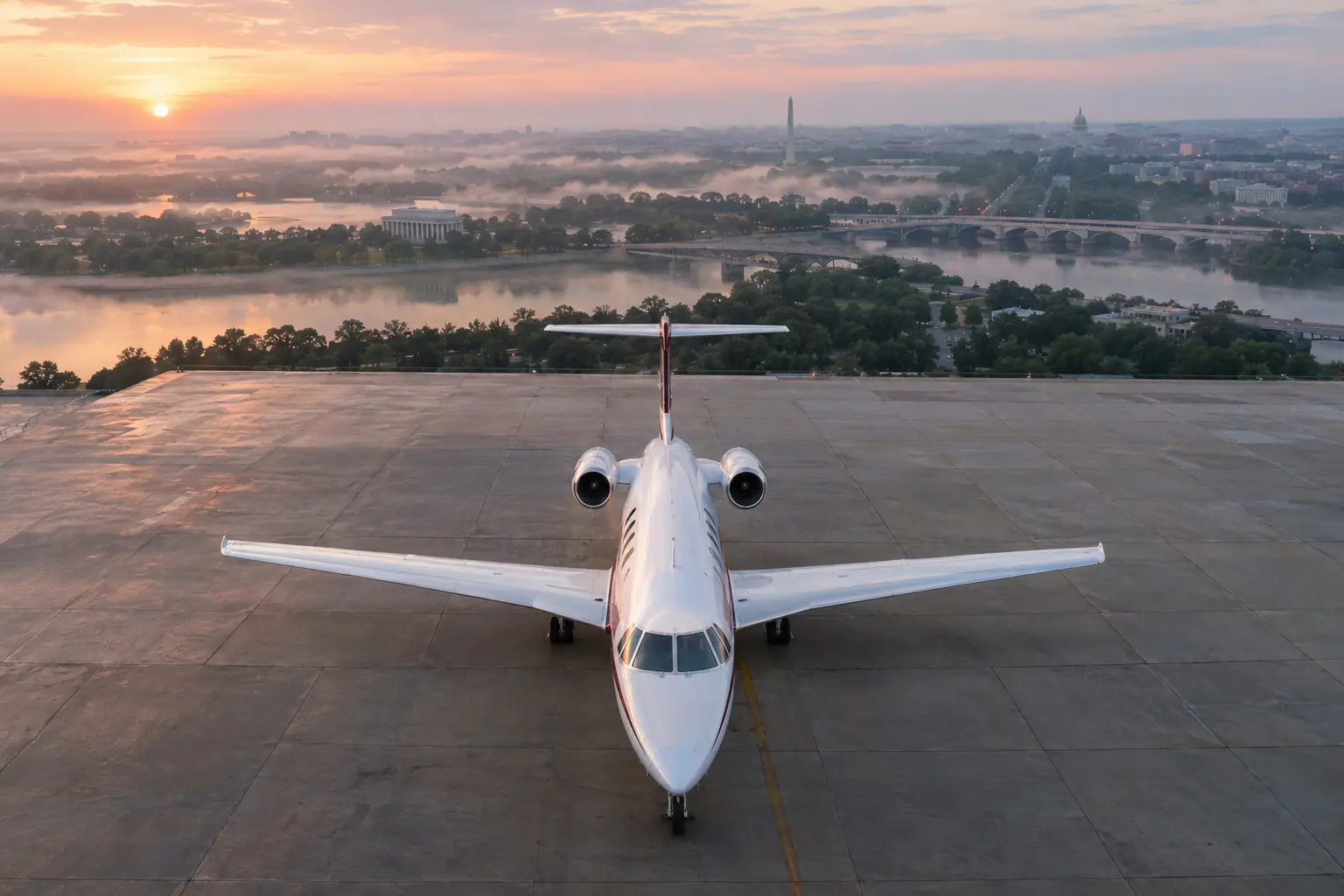
Heavy jet flight times and prices by route
On these 24 city pairs, a heavy jet needs 0h 38m to 3h 44m, with single-leg estimates between $9,500 and $54,000.
| Route | Time | Est. one-way price |
|---|---|---|
| New York → Austin | 3h 13m | $30,500–$46,500 |
| Los Angeles → Austin | 2h 43m | $26,000–$39,500 |
| Chicago → Austin | 2h 10m | $20,500–$31,500 |
| Dallas → Austin | 0h 38m | $9,500–$14,500 |
| Atlanta → Austin | 1h 53m | $18,000–$27,000 |
| Washington, DC → Austin | 2h 47m | $26,500–$40,500 |
| Boston → Austin | 3h 33m | $33,500–$51,500 |
| Philadelphia → Austin | 3h 05m | $29,500–$44,500 |
| Denver → Austin | 1h 46m | $17,000–$25,500 |
| Phoenix → Austin | 2h 00m | $19,000–$29,000 |
| San Francisco → Austin | 3h 13m | $30,500–$46,500 |
| Seattle → Austin | 3h 44m | $35,500–$54,000 |
| Las Vegas → Austin | 2h 25m | $23,000–$35,000 |
| Nashville → Austin | 1h 44m | $16,500–$25,000 |
| Charlotte → Austin | 2h 17m | $21,500–$33,000 |
| Orlando → Austin | 2h 13m | $21,000–$32,000 |
| Austin → New York | 3h 13m | $30,500–$46,500 |
| Austin → Aspen | 1h 52m | $17,500–$27,000 |
| Austin → Phoenix | 2h 00m | $19,000–$29,000 |
| Austin → San Francisco | 3h 13m | $30,500–$46,500 |
| Austin → Los Angeles | 2h 43m | $26,000–$39,500 |
| Austin → Nassau | 2h 47m | $26,500–$40,500 |
| Austin → Cabo San Lucas | 2h 03m | $19,500–$29,500 |
| Austin → Turks and Caicos | 3h 33m | $33,500–$51,500 |
Questions
What is the heavy jet charter cost Austin travelers should budget for in 2026?
Budget between $9,500 and $14,500 per flight hour for a heavy jet out of Austin in 2026. A transcontinental leg lands in the $30,500 to $51,500 range depending on distance and date. Those are estimates from operator quotes, and the final number depends on positioning, fees and how far out you book.
How much does a heavy jet from Austin to New York cost?
Expect roughly $30,500 to $46,500 for a heavy jet between New York and Austin. The route covers 1,302 nautical miles and flies nonstop in about 3 hours 13 minutes. Pricing swings with direction, since an aircraft may need to reposition empty before your departure.
Can a heavy jet fly Austin to Los Angeles nonstop?
Yes. Austin to Los Angeles is 1,084 nautical miles and takes about 2 hours 43 minutes nonstop in a heavy jet, with estimates around $26,000 to $39,500. Both aircraft in this class have range well beyond that distance, so a fuel stop is not part of the plan.
How many passengers does a heavy jet carry from Austin?
A heavy jet seats 10 to 14 passengers depending on the airframe. The Challenger 650 and Falcon 900LX each seat up to 12 in a standard configuration. If your group is larger, ask about a converted airliner or split the party across two aircraft departing together.
What does the shortest heavy jet flight from Austin cost?
Austin to Dallas is 151 nautical miles and about 38 minutes in the air, with estimates of $9,500 to $14,500. That is close to a single flight hour, and fixed fees make up a large share of it. For a hop that short, a light or midsize jet usually prices lower.
Who is responsible for the flight when I charter through a broker?
The operator holding the FAA Part 135 certificate has operational control of the flight, its crew and maintenance. The broker arranges the trip as your agent, which falls under DOT Part 295 rules. Ask for the operator name and certificate before you sign, and confirm the tail number matches the quote.