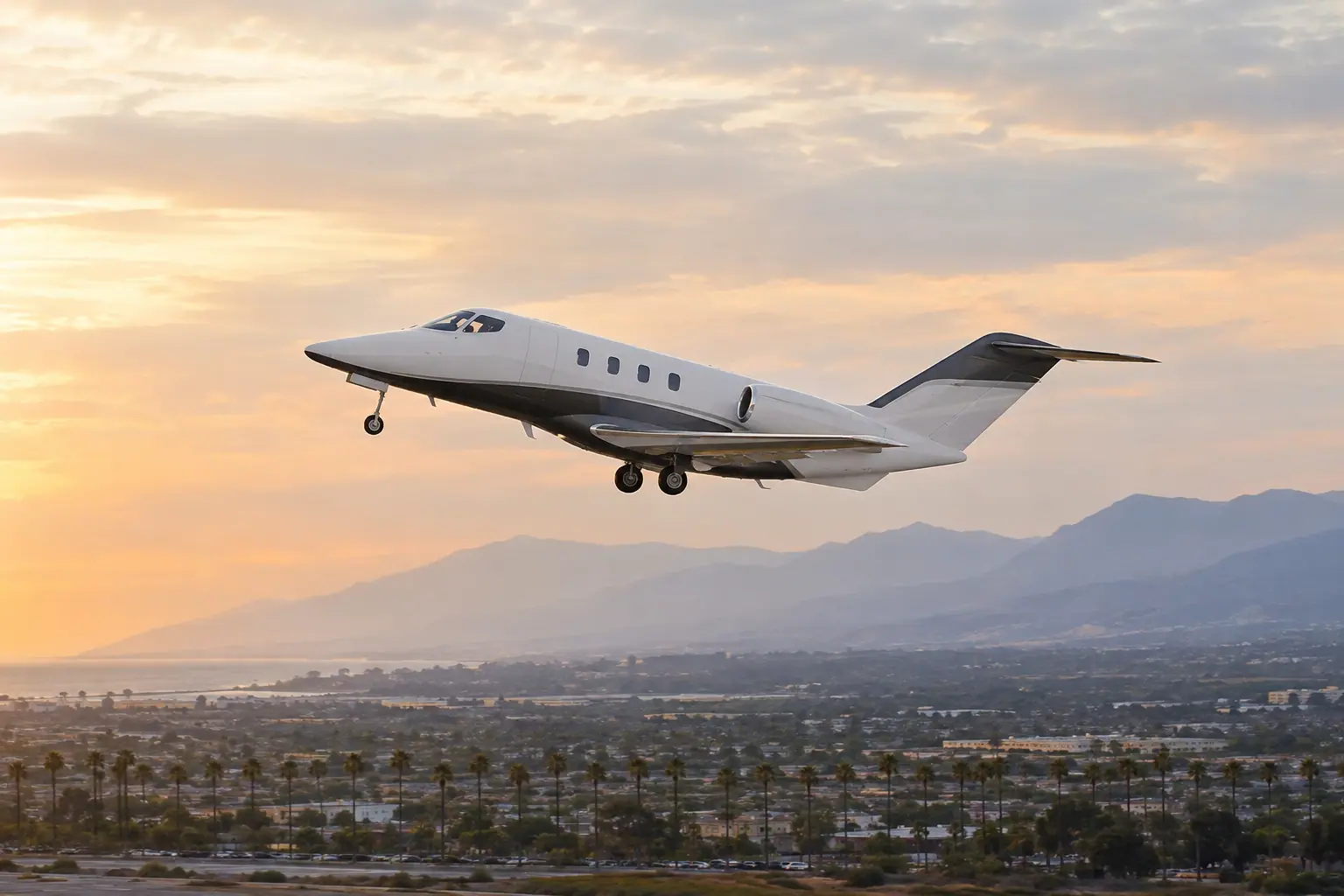
Private jet Los Angeles to Austin
A private jet Los Angeles to Austin covers 1,084 nautical miles. A light jet makes the nonstop run in about 2h 57m. This guide covers airports, aircraft classes, pricing and timing.
- 1,084 nm1,247 sm
- 2h 57mlight jet en route
- $11,000–$17,000one-way estimate
Los Angeles to Austin private jet prices by aircraft
Flying private from Los Angeles to Austin takes 2h 57m on a light jet over 1,084 nautical miles, with a one-way estimate of $11,000–$17,000.Below are the five cabin classes that can fly this leg nonstop, with flight times and estimated price ranges per one-way charter. The numbers are planning estimates, not quotes. Ask for live availability before you commit, since pricing moves with aircraft location, crew duty limits and how far out you book.
| Aircraft class | Flight time | Est. one-way price | Notes |
|---|---|---|---|
| Turboprop | 4h 06m | $9,000–$14,500 | No stops |
| Light jet | 2h 57m | $11,000–$17,000 | Best fit |
| Midsize jet | 2h 53m | $15,000–$22,500 | No stops |
| Super-midsize jet | 2h 43m | $19,500–$27,000 | No stops |
| Heavy jet | 2h 43m | $26,000–$39,500 | No stops |
Figures are per aircraft, not per seat, quoted before federal excise tax and segment fees. Block time covers taxi, climb and descent.
Why a light jet fits this trip
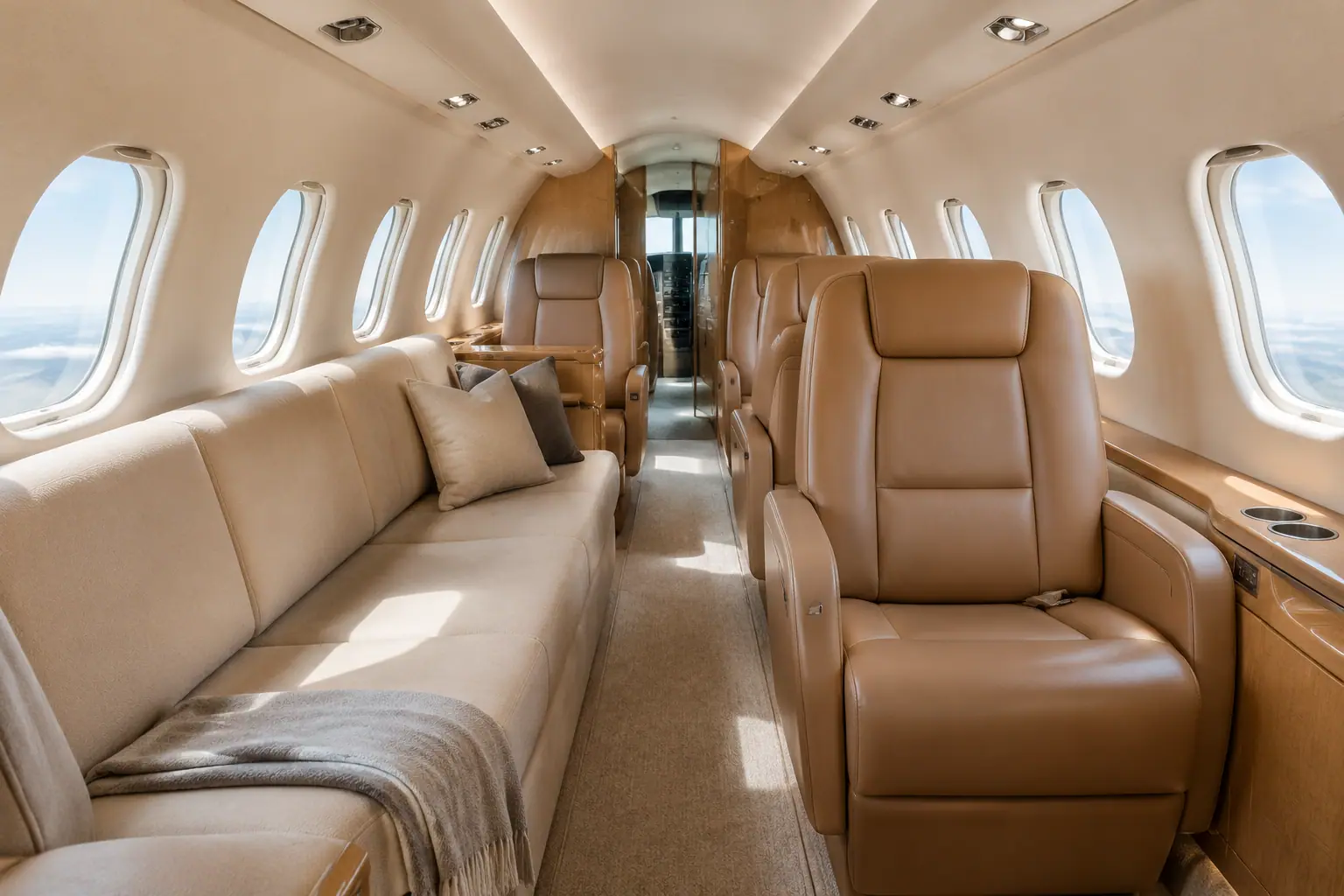
A light jet is the sensible default here. The distance sits comfortably inside the range of aircraft like the HondaJet Elite II and the Citation CJ4 Gen2, so you get a nonstop run in roughly 2h 57m without paying for cabin space you will not use over a leg this length. Turboprops are also nonstop but burn 4h 06m in the air, and the fare range barely improves, so the time savings usually justify the light jet.
Midsize and super-midsize jets shave a few minutes on this 1,084-mile route, landing near 2h 53m and 2h 43m, and they make sense when you are carrying five or more passengers with real luggage or want a stand-up cabin. Heavy jets fly the same 2h 43m but cost noticeably more, so reserve them for groups or for legs where cabin comfort is the priority over price. If you are comparing costs across several cabin types, the light jet bracket is where most Los Angeles to Austin charters settle.
Cessna Citation CJ4 Gen2
- 7 seats
- 451 kt cruise
- 2,165 nm range
Cabin 4 ft 9 in tall, 17 ft 4 in long. Baggage 71 cu ft.
Embraer Phenom 300E
- 7 seats
- 464 kt cruise
- 2,010 nm range
Cabin 4 ft 11 in tall, 17 ft 2 in long. Baggage 84 cu ft.
Leaving the Los Angeles area
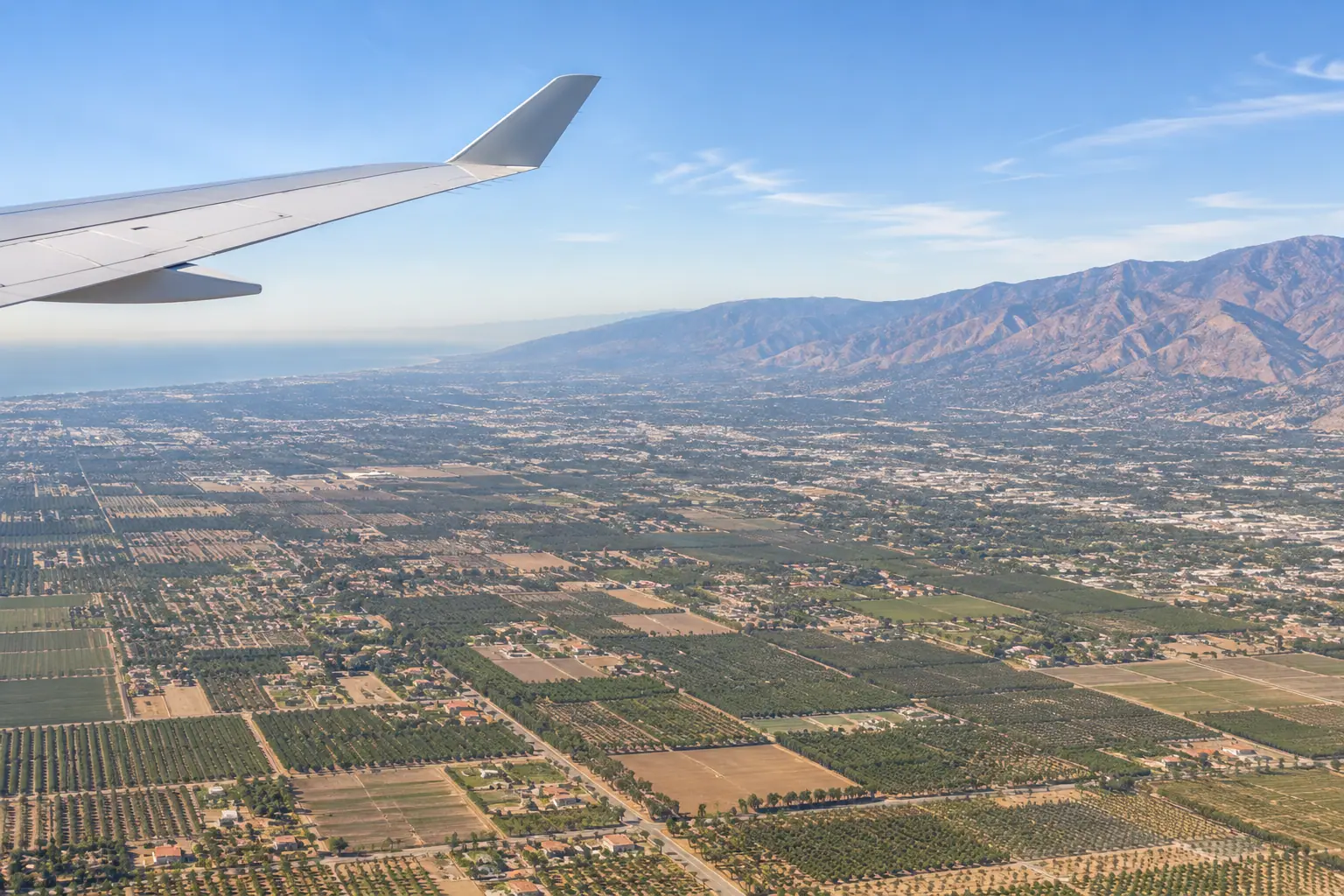
Van Nuys Airport, Burbank and LAX give you three distinct departure points on the Los Angeles end, and the one you pick shapes your ground time more than the flight itself. Van Nuys (KVNY) has an 8,001-foot runway and is the traditional home of business aviation in the Valley, which keeps FBO traffic brisk. Burbank (KBUR) sits closer to Hollywood and the studios, while LAX handles the passengers who are already flying into or out of the airline terminals.
If your party is spread across the basin, then splitting pickups between Van Nuys and Burbank can add more drive time than the flight saves, so agree on one field early. Operators reposition aircraft between these Los Angeles airports, so a quote for one field may come back cheaper on the same day. Give your broker a two-hour departure window and let them match you to the aircraft that is actually nearby.
Arriving in Austin
Austin Bergstrom (KAUS) and Austin Executive (KEDC) both accept nonstop arrivals from Los Angeles, and each suits a different kind of trip. KAUS has a 12,250-foot runway and sits about 1,090 miles from the Los Angeles strip, putting you close to downtown, the airport hotels and the rideshare queues you already know. KEDC in Pflugerville has a 6,025-foot runway and a quieter general aviation feel, which many charter passengers prefer when someone is meeting them curbside.
When your trip centers on downtown, South Congress or the convention center, KAUS usually wins on drive time. If you are headed toward Round Rock or the north Austin tech corridors, KEDC often gets you out of the aircraft and onto the road faster. Tell the operator your final address and let them recommend the field rather than defaulting to the airline airport.
| Airport | Ident | Runway |
|---|---|---|
| Van Nuys Airport | KVNY / VNY | 8,001 ft |
| Hollywood Burbank/Bob Hope Airport | KBUR / BUR | 6,886 ft |
| Los Angeles International Airport | KLAX / LAX | 12,894 ft |
| Austin Executive Airport | KEDC | 6,025 ft |
| Austin Bergstrom International Airport | KAUS / AUS | 12,250 ft |
Private jet Los Angeles to Austin timing
Private jet Los Angeles to Austin demand peaks around major Austin event weekends and the fall conference season, which is when light jet pricing tends to sit at the top of the $11,000 to $17,000 band rather than the bottom. Formula One weekend, South by Southwest and the spring festival calendar pull aircraft into Central Texas from across the country, and that competition for hulls is what moves your quote.
If your travel dates are fixed, then booking two to three weeks out generally gives you the widest choice of light jets and the best chance of a mid-band price. Last-minute requests still work, but you may be choosing between a midsize at $15,000 and up or a turboprop that takes four hours. Return legs are the other lever on this Austin route: a same-day round trip often costs less than two one-way charters because the aircraft stays with you instead of repositioning empty. Empty leg flights back toward Los Angeles do appear at short notice, though they rarely line up with a fixed schedule. Summer heat can nudge early-afternoon departures, so ask about performance on hot days.
Private jet routes similar to Los Angeles to Austin
These 6 private jet city pairs span 886 to 1,304 nautical miles, with single-leg light jet estimates ranging from $9,500 to $24,500.

Questions about this route
How long is a private jet Los Angeles to Austin flight?
A light jet flies the 1,084-nautical-mile route nonstop in about 2h 57m. Midsize jets land in roughly 2h 53m and super-midsize or heavy jets in about 2h 43m. A turboprop also goes nonstop but needs around 4h 06m, so the time difference is real rather than cosmetic when you are planning a same-day meeting in Austin.
What does a private jet Los Angeles to Austin cost?
Estimated one-way pricing starts near $11,000 for a light jet and runs to around $17,000 at the top of that bracket. Midsize jets fall between $15,000 and $22,500, super-midsize between $19,500 and $27,000, and heavy jets between $26,000 and $39,500. These are estimates, so ask for a live quote on your dates before you commit.
Which Austin airport will my private jet Los Angeles to Austin flight use?
Most charters arrive at Austin Bergstrom (KAUS), which has a 12,250-foot runway, or Austin Executive (KEDC) in Pflugerville, whose runway is 6,025 feet. Both handle nonstop arrivals from Los Angeles at roughly 1,090 miles from the departure strip. Your final destination and the operator's ground arrangements usually decide which one is booked.
Can I fly Los Angeles to Austin and back in one day?
Yes, and it is often the better value. A same-day round trip keeps one aircraft with you instead of paying for two separate one-way charters, and a 2h 57m leg is short enough that crew duty limits are rarely the constraint. Build in ground time for your meeting and expect pricing closer to the upper half of the $11,000 to $17,000 light jet range on busy Austin weekends.
Who is responsible for the flight and the booking?
The flight is flown by an operator holding FAA Part 135 authority, and that operator keeps operational control of the aircraft and crew. Your broker arranges the trip as an agent under DOT Part 295 rules and does not own the aircraft. If a leg ever touches another country, CBP and TSA rules apply, though this route stays entirely domestic. Ask who the operator is before you book.
Does a turboprop make sense on this route?
Rarely, given the numbers. A turboprop is nonstop but takes about 4h 06m against 2h 57m in a light jet, and its estimated price band of $9,000 to $14,500 overlaps the light jet range. You save no meaningful money by choosing the turboprop on this 1,084-mile leg unless one happens to be the only aircraft near your departure field.