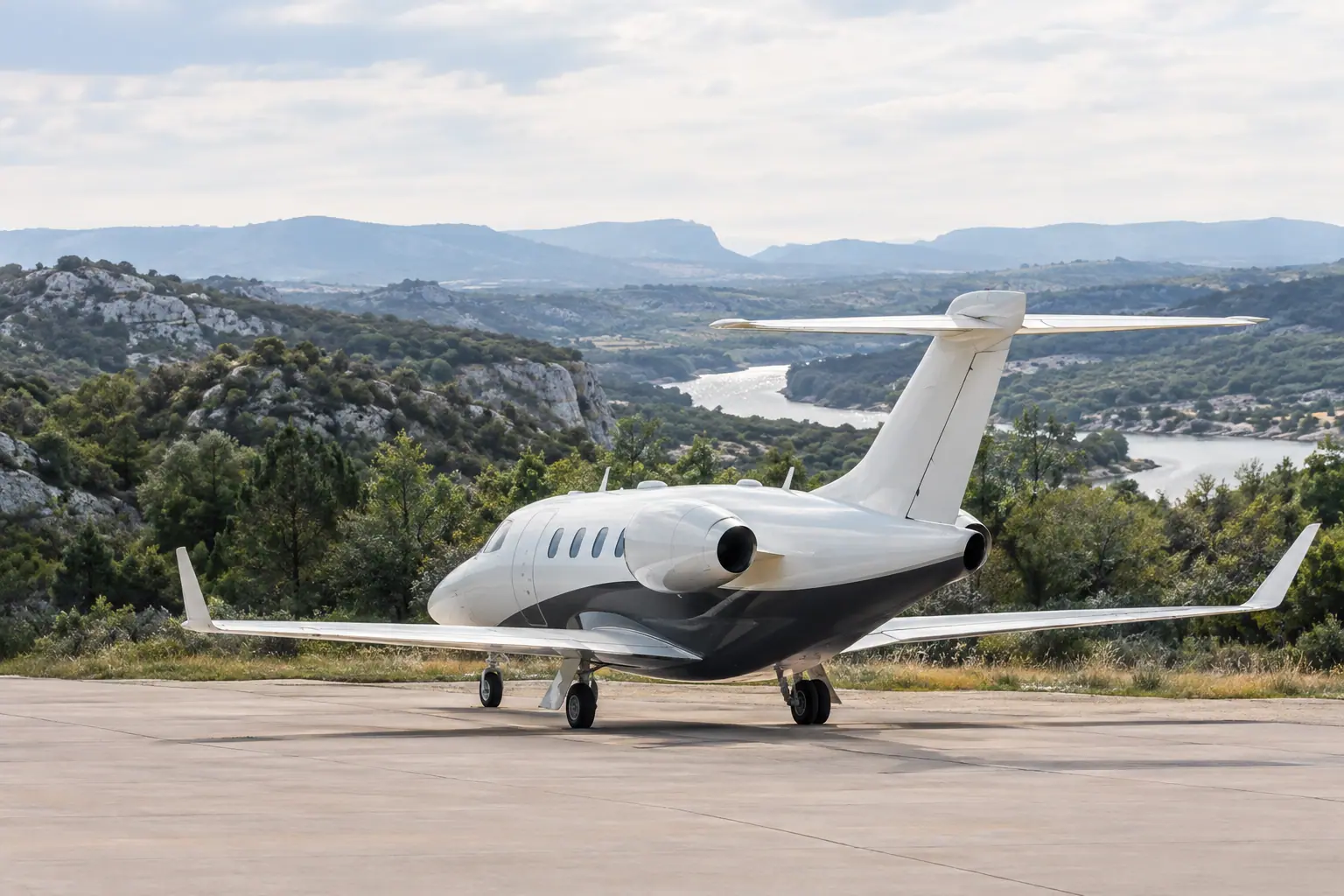
Private jet Austin to Phoenix
A private jet Austin to Phoenix covers 764 nautical miles nonstop. A light jet makes the trip in 2h 10m, with estimates from $8,000 to $12,500. Here is how the classes, airports and pricing actually compare.
- 764 nm879 sm
- 2h 10mlight jet en route
- $8,000–$12,500one-way estimate
Austin to Phoenix private jet prices by aircraft
Flying private from Austin to Phoenix takes 2h 10m on a light jet over 764 nautical miles, with a one-way estimate of $8,000–$12,500.Five classes fit this leg, and they are closer together than you might expect on a 764 nm run. The turboprop gives up nearly an hour to a light jet and saves little money, while anything above midsize buys cabin comfort more than speed. The numbers below are estimates per aircraft, not per seat, and operators confirm final pricing on the day.
| Aircraft class | Flight time | Est. one-way price | Notes |
|---|---|---|---|
| Turboprop | 2h 58m | $6,500–$10,500 | No stops |
| Light jet | 2h 10m | $8,000–$12,500 | Best fit |
| Midsize jet | 2h 07m | $11,000–$16,500 | No stops |
| Super-midsize jet | 2h 00m | $14,500–$20,000 | No stops |
| Heavy jet | 2h 00m | $19,000–$29,000 | No stops |
Figures are per aircraft, not per seat, quoted before federal excise tax and segment fees. Block time covers taxi, climb and descent.
Why a light jet fits this trip
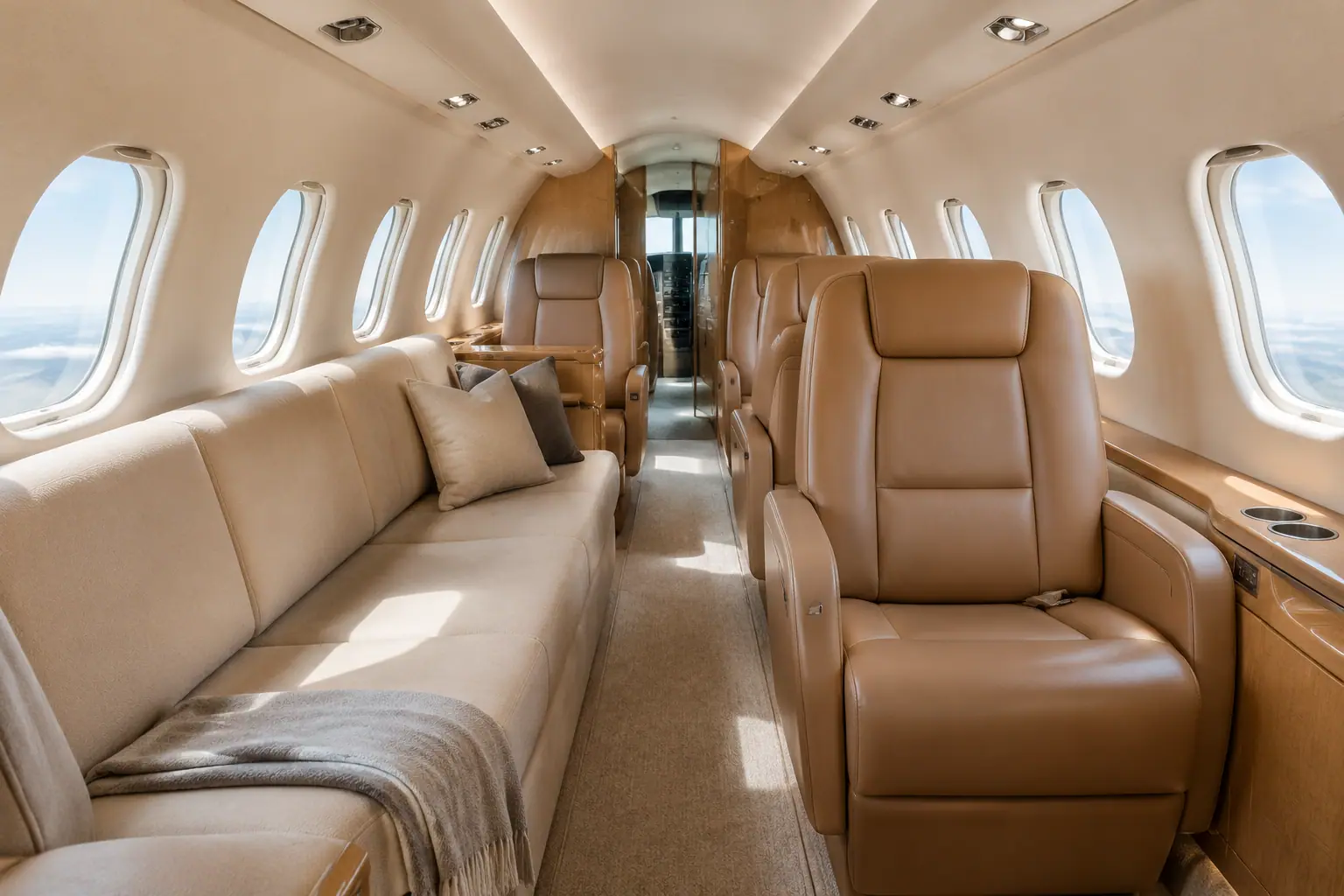
A light jet is the honest match for 764 nautical miles because the leg sits comfortably inside the range of both the HondaJet Elite II and the Citation CJ4 Gen2. The CJ4 Gen2 carries up to 7 passengers at 451 knots, the HondaJet seats 5, and both land with fuel to spare. People ask about midsize and super-midsize on this route; they fly here, but you are paying for a taller cabin and more baggage space rather than a meaningfully faster arrival.
If the schedule is fixed and the group is small, then a light jet keeps the estimate near $8,000 to $12,500 rather than the $14,500 to $20,000 a super-midsize typically quotes. A turboprop at 2h 58m costs almost the same as a light jet, so most travelers see no reason to give up the speed. Heavy jets on this route make sense mainly for larger groups with heavy luggage or a same-day return that needs the extra cabin room.
Charter brokers arrange, they do not fly, and that is worth knowing before you compare quotes because the FAA issues operating authority to the Part 135 operator actually flying the aircraft. Your broker acts as your agent under DOT Part 295 rules, matching you to a certificated operator who holds operational control of the flight.
Cessna Citation CJ4 Gen2
- 7 seats
- 451 kt cruise
- 2,165 nm range
Cabin 4 ft 9 in tall, 17 ft 4 in long. Baggage 71 cu ft.
Embraer Phenom 300E
- 7 seats
- 464 kt cruise
- 2,010 nm range
Cabin 4 ft 11 in tall, 17 ft 2 in long. Baggage 84 cu ft.
Leaving Austin
Austin Executive Airport in Pflugerville is the usual private departure point with a 6,025 ft runway, while Austin Bergstrom handles larger aircraft on its 12,250 ft strip. Most light jets and turboprops leave from Executive; if your aircraft is a heavy jet or your group is arriving on a commercial connection, Bergstrom is the more practical start.
Your home airport details live on our Austin pages, so we keep this short. What matters for this route is the departure slot, because a morning departure from Austin lands in Phoenix before the desert heat builds and gives you a full working day on the ground.
Arriving in Phoenix
Phoenix Deer Valley Airport puts you 8,196 ft of runway on the north side of the metro and suits light jets and turboprops heading to Scottsdale, north Phoenix or the Loop 101 corridor. Sky Harbor, with its 11,489 ft runway, is the better arrival when your ground plans sit downtown, in Tempe or near the airport itself.
Deer Valley saves you the drive through central Phoenix traffic if your meeting is north of Camelback. Sky Harbor costs a little more in fees but drops you minutes from downtown and the convention center, which is why convention and spring-training travelers often prefer it.
| Airport | Ident | Runway |
|---|---|---|
| Phoenix Deer Valley Airport | KDVT / DVT | 8,196 ft |
| Phoenix Sky Harbor International Airport | KPHX / PHX | 11,489 ft |
| Austin Executive Airport | KEDC | 6,025 ft |
| Austin Bergstrom International Airport | KAUS / AUS | 12,250 ft |
When to book ahead
Demand peaks in January through April, when Phoenix fills with resort and spring-training traffic, and again around major events at the convention center and the Scottsdale auction weeks. Aircraft reposition quickly, so a light jet quoted today may be gone tomorrow for a Friday departure in high season.
If you can move your departure by a day, then you often find more aircraft and steadier pricing, especially on Sunday returns when many Phoenix-bound travelers are flying home to Austin. Book two to three weeks out for peak-season weekends and a week ahead is usually enough in July and August, when summer heat thins the leisure demand.
Private jet routes similar to Austin to Phoenix
These 6 private jet city pairs span 700 to 1,304 nautical miles, with single-leg light jet estimates ranging from $7,500 to $24,500.
Questions about this route
How long is a private jet Austin to Phoenix flight?
A light jet flies the route in about 2h 10m nonstop, covering 764 nautical miles or roughly 879 statute miles. A midsize jet trims that to 2h 07m, a super-midsize and heavy jet reach 2h 00m, and a turboprop takes 2h 58m. The differences above light jet are small enough that cabin comfort, not speed, drives most upgrades.
What does a private jet Austin to Phoenix cost?
Light jet estimates run $8,000 to $12,500 for the aircraft, which is the most common choice on this leg. Midsize quotes land at $11,000 to $16,500, super-midsize at $14,500 to $20,000, heavy jets at $19,000 to $29,000, and turboprops at $6,500 to $10,500. Treat all of these as estimates; operators confirm the final figure.
Can I fly private from Austin to Phoenix in one day and return?
Yes. A 2h 07m to 2h 10m leg each way makes a same-day round trip realistic on a light or midsize jet, with roughly four to five hours of flying and a full afternoon on the ground. Expect the operator to quote both legs plus any wait time, and book the return slot early if you need a specific evening departure.
Which Phoenix airport do private jets use from Austin?
Phoenix Deer Valley is the common arrival for light jets and turboprops, with an 8,196 ft runway serving the north metro and Scottsdale. Sky Harbor's 11,489 ft runway handles larger aircraft and puts you closer to downtown and Tempe. Both are public airports with fixed-base operators, and your broker matches the field to your ground plans.
Is a turboprop cheaper than a light jet on this route?
Barely. Turboprop estimates of $6,500 to $10,500 overlap the light jet range of $8,000 to $12,500, and the turboprop takes 2h 58m against 2h 10m. On a 764 nm leg the speed difference is real, so most travelers find the light jet worth the modest gap once you factor in the extra hour in the air.
Who is responsible for safety on a charter flight from Austin to Phoenix?
The operator flying the aircraft holds FAA Part 135 certification and operational control, which covers crew, maintenance and dispatch. Your broker arranges the flight as your agent under DOT Part 295 and can share the operator's certificate details before you book. Ask to see that information if it is not offered; it is a fair question.