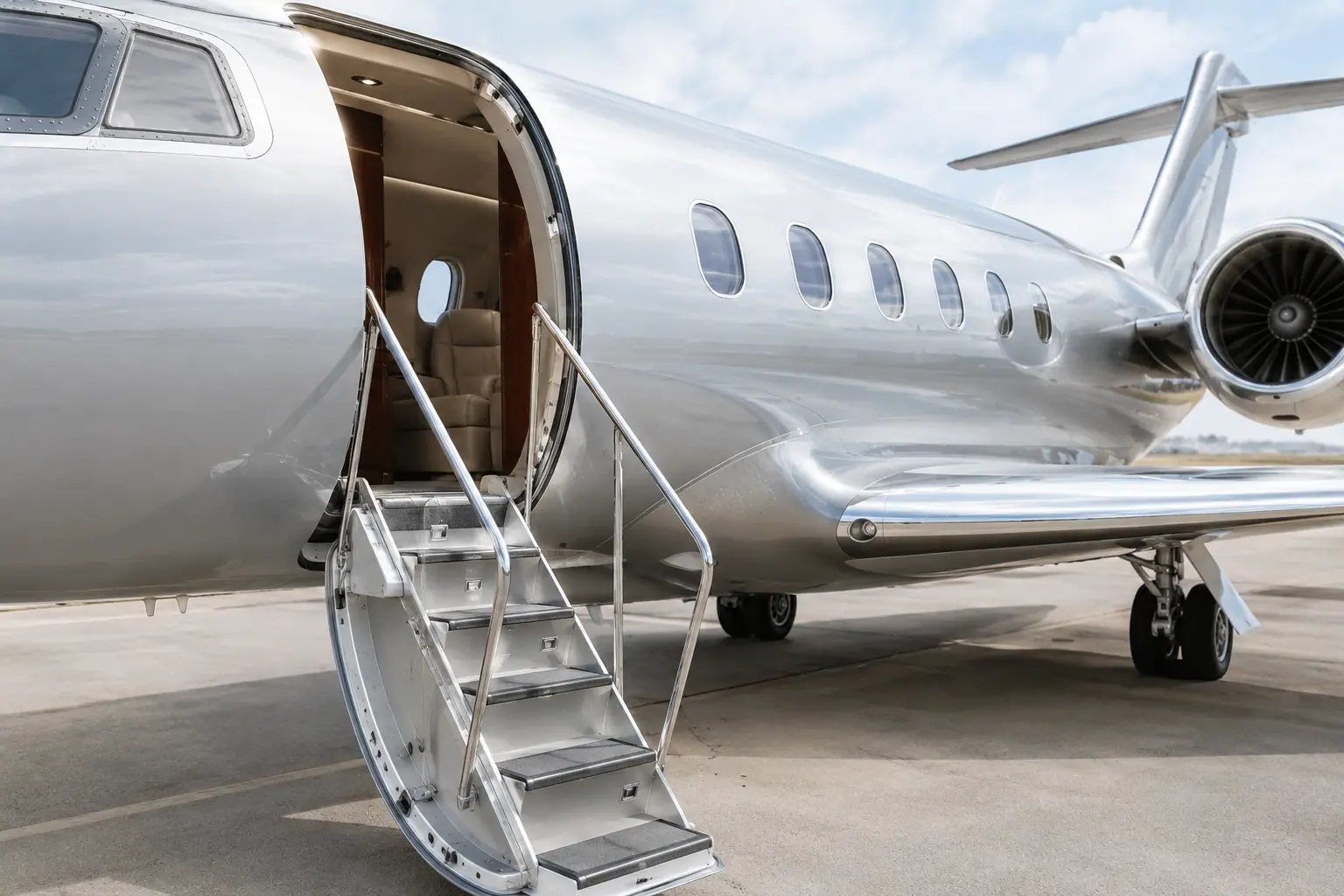
Private jet cost Austin by class
Quoting a private jet cost in Austin starts with the aircraft class, not the airport. Light jets bill $3,800 to $5,800 an hour, with a Dallas leg running $4,000 to $6,000. Here is how the numbers stack up before you commit.
- Home
- Pricing
Hourly charter rates
The ranges below are hourly estimates for the Austin market in 2026, before taxes, landing fees and crew overnight costs. Use them to bracket a budget, then let a broker price the actual tail number, since age, availability and repositioning move the final figure more than the class label does.
| Class | Seating | Cruise | Est. hourly rate |
|---|---|---|---|
| Turboprop | 6-8 | 300 kt | $2,200–$3,500 |
| Light jet | 4-7 | 430 kt | $3,800–$5,800 |
| Midsize jet | 7-9 | 440 kt | $5,200–$7,800 |
| Super-midsize jet | 8-10 | 470 kt | $7,200–$10,000 |
| Heavy jet | 10-14 | 470 kt | $9,500–$14,500 |
Sample one-way private jet prices by route
These 8 private jet city pairs span 151 to 1,453 nautical miles, with single-leg light jet estimates ranging from $4,000 to $26,500.
| Route | Light jet | Midsize | Heavy |
|---|---|---|---|
| New York → Austin | $16,000–$24,500 | $17,500–$26,500 | $30,500–$46,500 |
| Dallas → Austin | $4,000–$6,000 | $5,000–$8,000 | $9,500–$14,500 |
| Boston → Austin | $17,500–$26,500 | $19,500–$29,500 | $33,500–$51,500 |
| Phoenix → Austin | $8,000–$12,500 | $11,000–$16,500 | $19,000–$29,000 |
| Las Vegas → Austin | $10,000–$15,000 | $13,500–$20,000 | $23,000–$35,000 |
| Orlando → Austin | $9,000–$14,000 | $12,000–$18,500 | $21,000–$32,000 |
| Austin → Phoenix | $8,000–$12,500 | $11,000–$16,500 | $19,000–$29,000 |
| Austin → Nassau | $11,500–$17,500 | $15,500–$23,000 | $26,500–$40,500 |
What moves private jet cost in Austin
Aircraft class and cruise speed
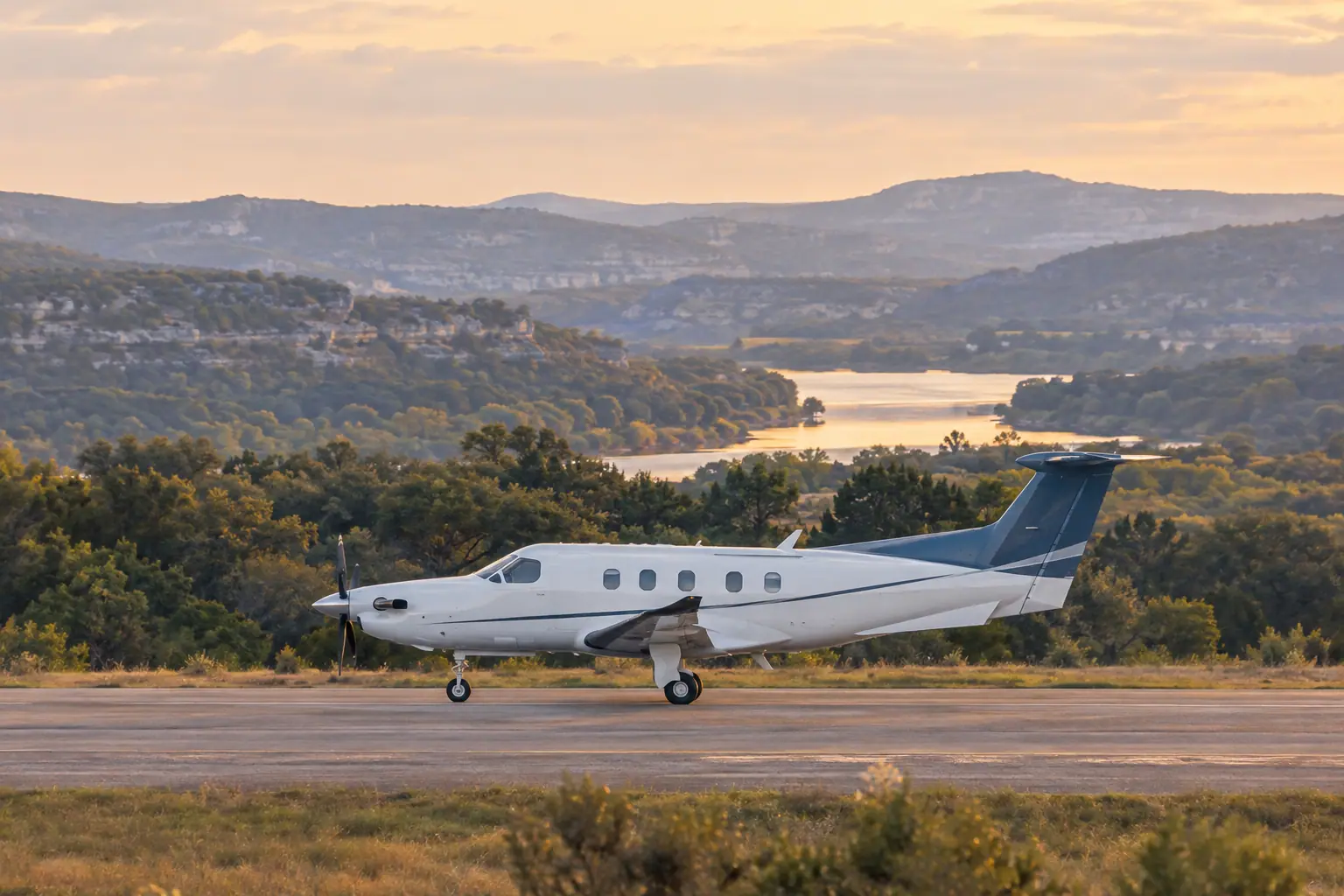
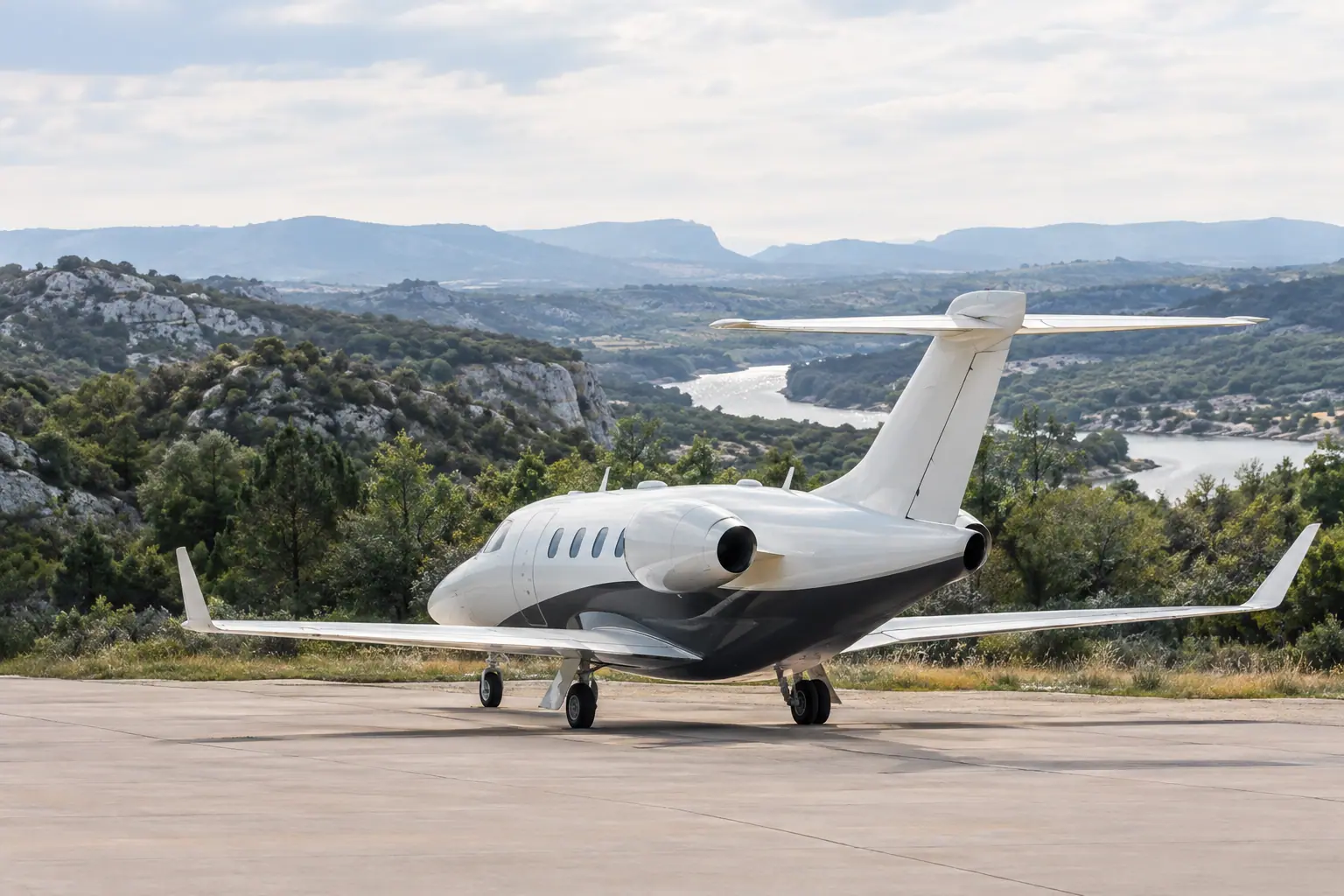
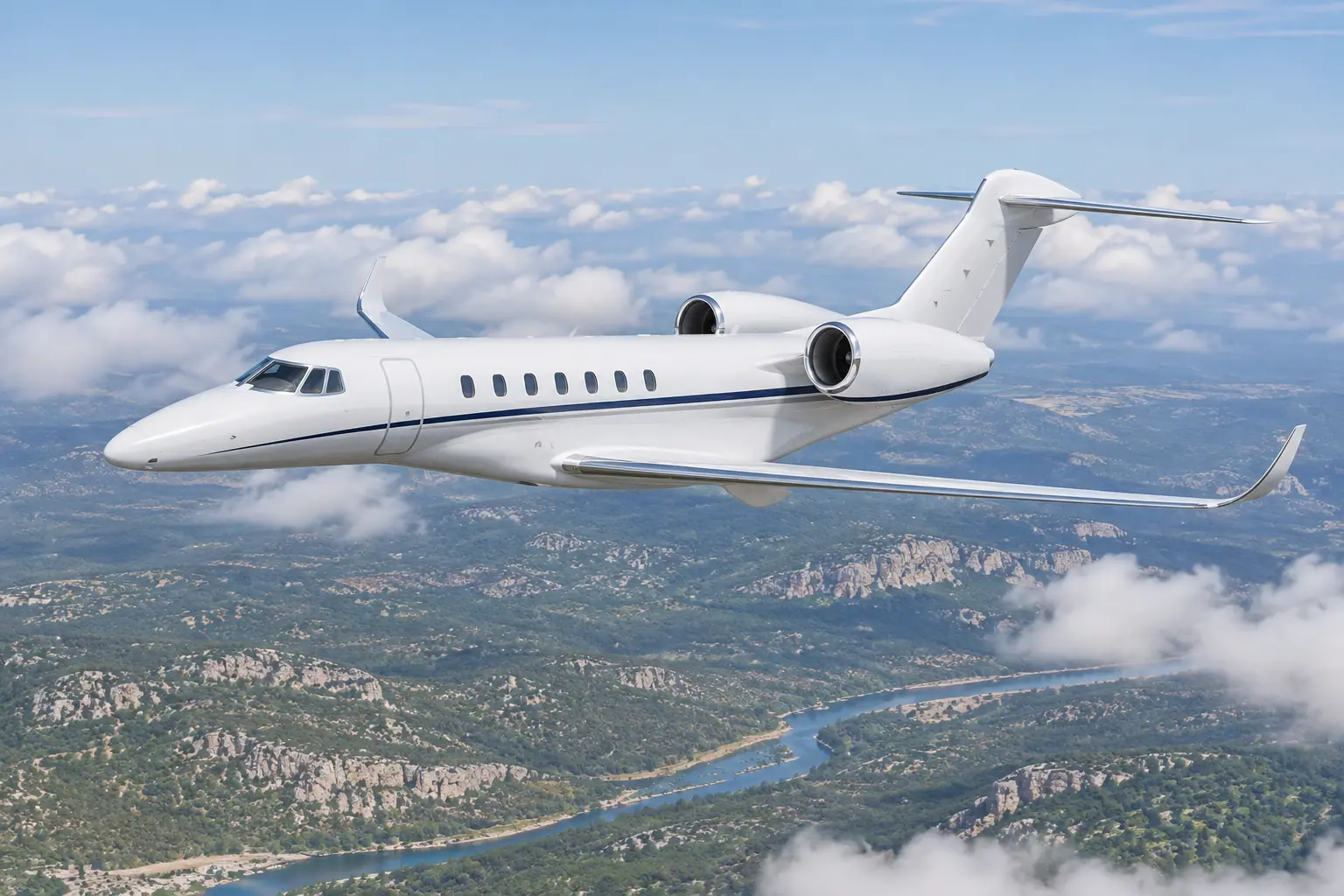
A turboprop like the King Air 350i bills $2,200 to $3,500 an hour at 312 knots, while a heavy jet runs $9,500 to $14,500 at 470 knots. A light jet at $3,800 to $5,800 an hour is the Austin sweet spot for regional legs. Faster aircraft cost more per hour but can cut billable time on long sectors.
Repositioning and empty legs
You pay for the flight in both directions unless the operator already has an aircraft near Austin. A one-way charter out of KEDC often carries a ferry charge back to base. Ask whether the quote includes repositioning or an empty leg discount on the Austin route. Empty legs are priced lower because the aircraft is moving anyway.
Passenger count and cabin class
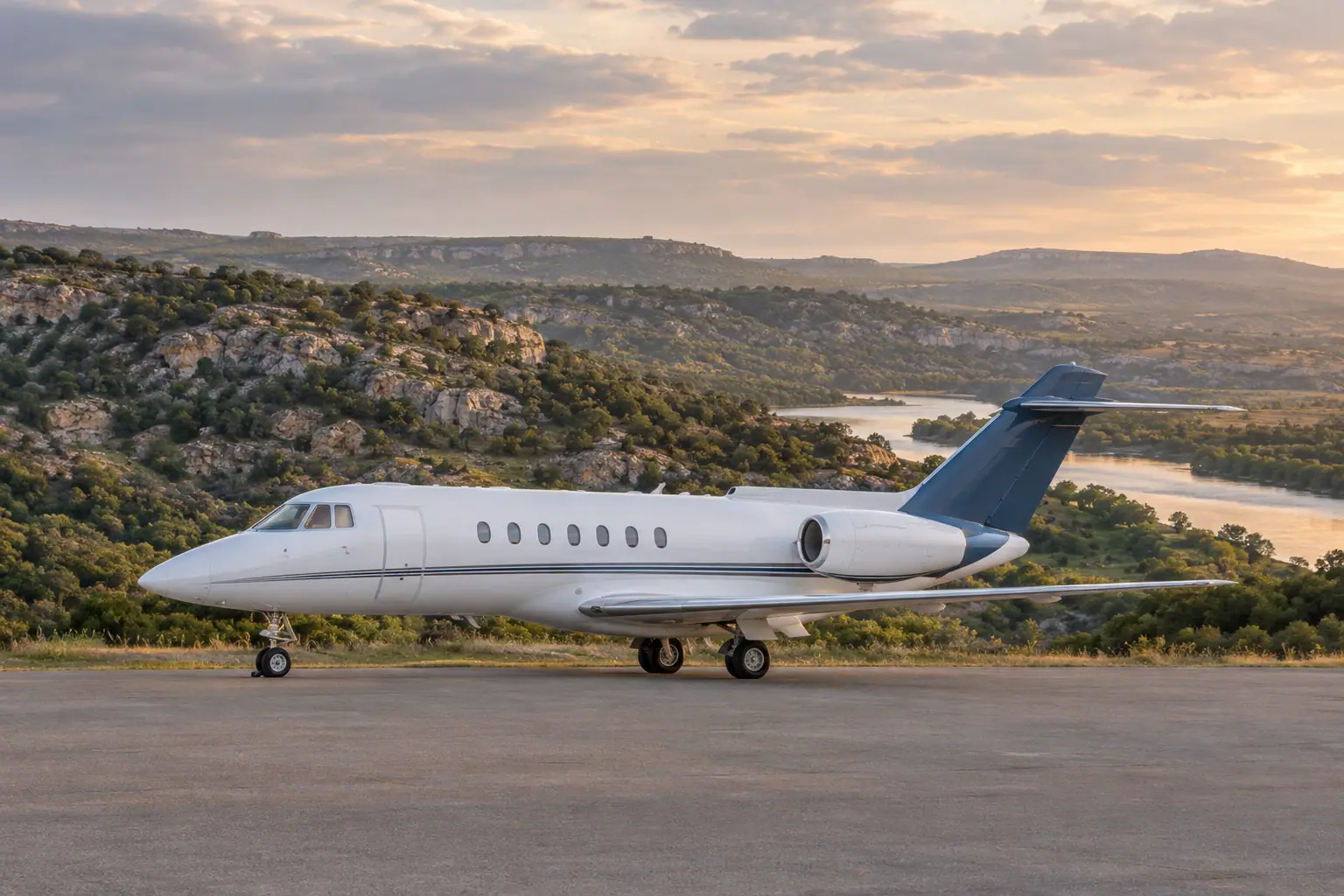
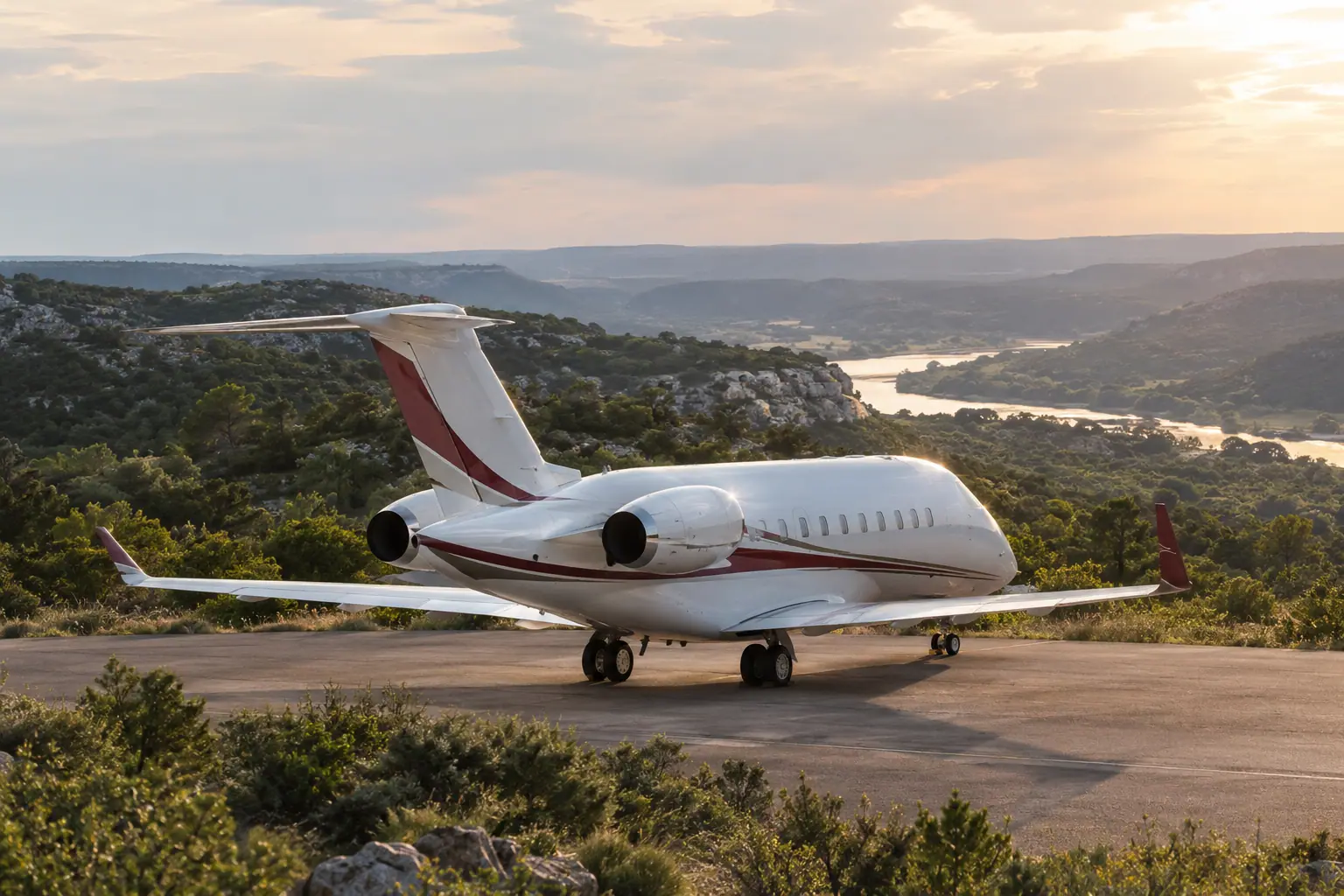
A Citation CJ4 Gen2 seats seven, so an eighth passenger pushes you into a midsize Hawker 800XP. Moving from a light jet to a midsize adds roughly $1,400 to $2,000 an hour on the same route. Group size drives class, and class drives the hourly rate.
Summer density altitude at Austin airports
On a 115F afternoon, KEDC sees a peak density altitude of 3,800 feet and KAUS 3,700 feet. Thin air lengthens takeoff rolls and can force a fuel stop on legs a jet would otherwise fly nonstop. A July departure from Austin Executive carries a density altitude of 3,200 feet before noon. That matters most for turboprops and light jets.
Route distance and time flown
Billing is by flight hour, so distance sets the floor. Austin to Chicago is 832 nautical miles and about 2h 20m in a light jet; Austin to Seattle is 1,534 nautical miles and 4h 48m. A New York to Austin light jet charter estimates $16,000 to $24,500 one way. Longer legs also raise crew duty time and catering.
Calendar demand around Austin events
Formula 1 weekend, South by Southwest and UT home games compress aircraft supply the way any major city event does. Rates climb when every based tail is booked and operators must import capacity. Book Austin charter flights weeks ahead of an event weekend to hold the base rate.
Fees that sit outside the hourly rate
The hourly figure covers aircraft, crew and fuel, but landing and handling fees are billed separately and vary by airport. KAUS, with its 12,250-foot runway and three FBOs, handles larger aircraft and typically prices higher than Austin Executive. Segment fees, international departure taxes and CBP processing on a Mexico or Caribbean leg add to the total, and a Cabo San Lucas round trip at 783 nautical miles each way still means customs on the return. Ask for a line-item quote so the taxes, fees and crew expenses are visible rather than folded into one number.
Crew overnight and per diem charges apply when a trip keeps the pilots away from base. A same-day Austin to Phoenix turn at 2h 10m each way usually avoids them; a multi-day ski trip to Aspen does not. Cancellation terms also carry real money: most operators scale the penalty by how close you cancel, and weather waivers are not automatic. A broker working under DOT Part 295 rules acts as your agent, so the operator's contract terms, not the broker's, govern the flight itself.
Lowering the bill on your trip
Fly an empty leg into or out of Austin
Operators reposition aircraft constantly, and a one-way leg with no return revenue prices well below a standard charter. Empty leg flights into Austin from Dallas or Houston are the most common short-notice deals. Flexibility on timing is the price of the discount.
Match the turboprop to the mission
For Austin to Dallas at 151 nautical miles and about 40 minutes, a King Air 350i at $2,200 to $3,500 an hour costs far less than a jet. Short hops under 400 nautical miles rarely justify a light jet premium. Save the jet for the long sectors where speed pays.
Consolidate into one longer charter
Two one-way charters with separate repositioning cost more than a single round trip flown by one aircraft. A round trip keeps the same tail on the ground and removes the ferry charge home. Combine meetings and return the same day where the schedule allows.
Book midweek and off-peak
Tuesday through Thursday departures see looser supply than Friday afternoons. When aircraft are idle, operators negotiate on rate and waive some minimums. Shoulder-season dates in Austin hold prices closer to the low end of each class range.
Questions
What does private jet cost Austin typically run per hour?
Light jets run $3,800 to $5,800 an hour, midsize $5,200 to $7,800 and heavy jets $9,500 to $14,500. A turboprop like the King Air 350i is the cheapest entry at $2,200 to $3,500. These are estimate ranges, not quotes; the actual rate depends on the specific aircraft, its base and the date. A broker prices the tail number, not the category.
How much is a light jet charter from Dallas to Austin?
About $4,000 to $6,000 one way for the 151-nautical-mile leg, roughly 40 minutes in the air. That is short enough that a turboprop often makes more sense on cost. The estimate excludes landing fees at KAUS or KEDC and any repositioning charge, so ask for those as line items.
Does flying into Austin Executive or Austin Bergstrom change the price?
Yes. Austin Executive has a 6,025-foot runway and two FBOs, while Bergstrom has a 12,250-foot runway and three, and handles larger aircraft at higher handling cost. KEDC suits light and midsize jets; KAUS is the better fit for heavy jets and airline connections. Airport fees are billed outside the hourly rate.
What is the private jet cost Austin to New York in a light jet?
An estimated $16,000 to $24,500 one way for the 1,302-nautical-mile route, about 4h 14m of flight time. That is near the top of a light jet's comfortable range, so some tails will need a fuel stop or a midsize upgrade. Summer heat at departure can push a light jet toward that stop.
Can I charter a jet Austin to Cabo San Lucas and clear customs?
Yes, the route is 783 nautical miles and about 2h 13m in a light jet, with estimates of $8,500 to $13,000 one way. International legs require CBP processing on the return to Austin and passport documentation for everyone aboard. Build extra time on the ground for customs clearance and confirm the operator handles the filing.
Who is responsible for the flight when I charter through a broker?
The operator holds operational control and flies under FAA Part 135 rules; the broker arranges the trip as an agent under DOT Part 295. That means the safety and conduct of the flight rest with the certificated operator, not the broker. Ask for the operator's name and certificate before you sign, and read the cancellation terms in the operator's contract.
Which jet class should I book for a group of eight out of Austin?
Eight passengers narrows the field to a midsize Hawker 800XP or Citation XLS+, a super-midsize like the G280, or a heavy jet. At $5,200 to $7,800 an hour the midsize is the value pick for regional legs. Baggage volume often decides it: the Hawker carries 50 cubic feet versus 154 on the G280.