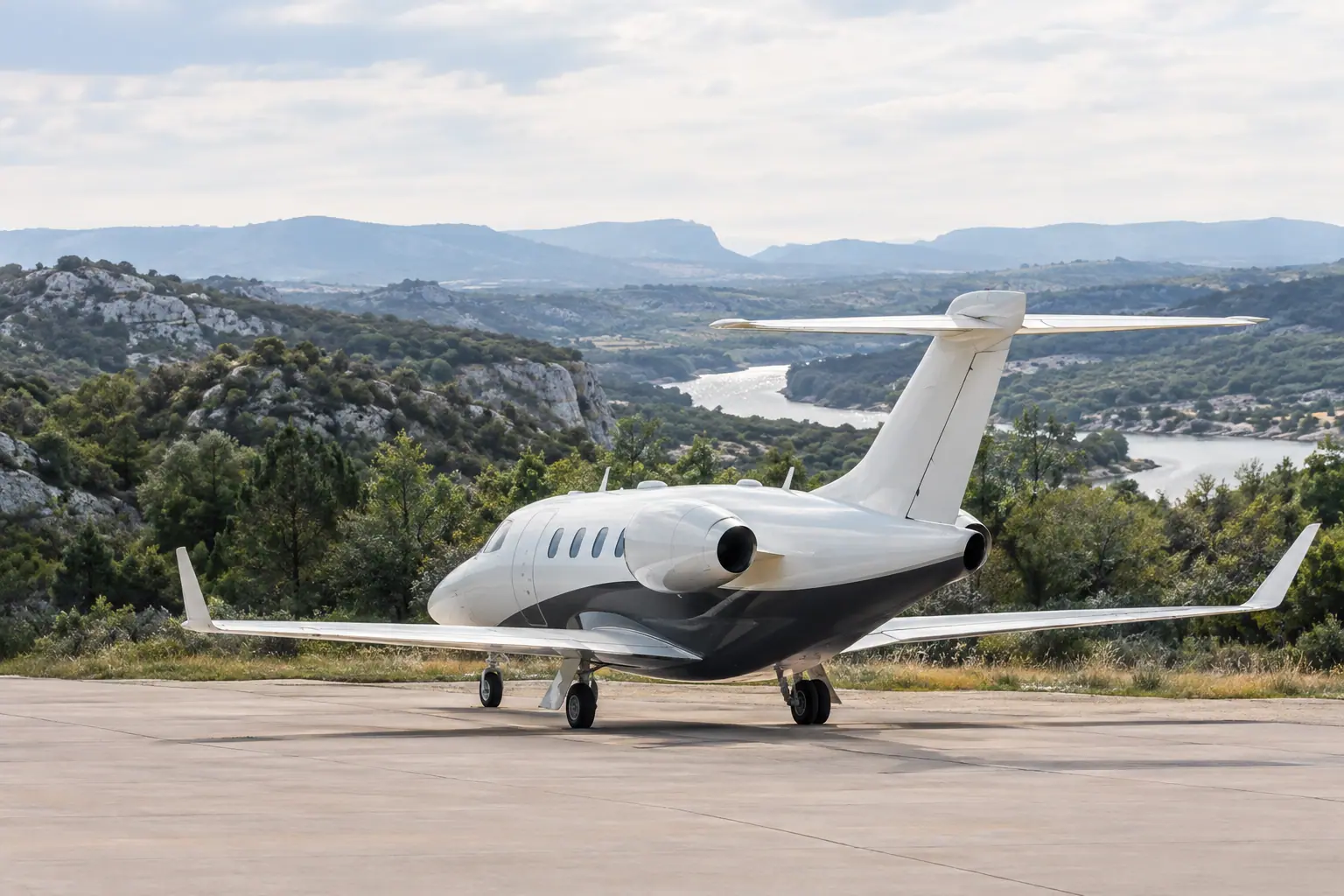
Private jet Denver to Austin
Private jet Denver to Austin covers 656 nautical miles nonstop, which is a regional leg well within reach of every class. A light jet makes the trip in about 1h 54m. Planning estimates run from $7,000 to $11,000 each way.
- 656 nm755 sm
- 1h 54mlight jet en route
- $7,000–$11,000one-way estimate
Denver to Austin private jet prices by aircraft
Flying private from Denver to Austin takes 1h 54m on a light jet over 656 nautical miles, with a one-way estimate of $7,000–$11,000.Five aircraft classes fly this leg nonstop, and the gap between the slowest turboprop and the fastest heavy jet is only about 50 minutes, so comfort, baggage and cabin size matter more than raw speed here. The figures below are planning estimates for the whole aircraft, not per seat; firm pricing depends on the specific jet, crew availability and your dates, and we confirm it before you commit.
| Aircraft class | Flight time | Est. one-way price | Notes |
|---|---|---|---|
| Turboprop | 2h 36m | $5,500–$9,000 | No stops |
| Light jet | 1h 54m | $7,000–$11,000 | Best fit |
| Midsize jet | 1h 52m | $9,500–$14,500 | No stops |
| Super-midsize jet | 1h 46m | $12,500–$17,500 | No stops |
| Heavy jet | 1h 46m | $17,000–$25,500 | No stops |
Figures are per aircraft, not per seat, quoted before federal excise tax and segment fees. Block time covers taxi, climb and descent.
Why a light jet fits this trip
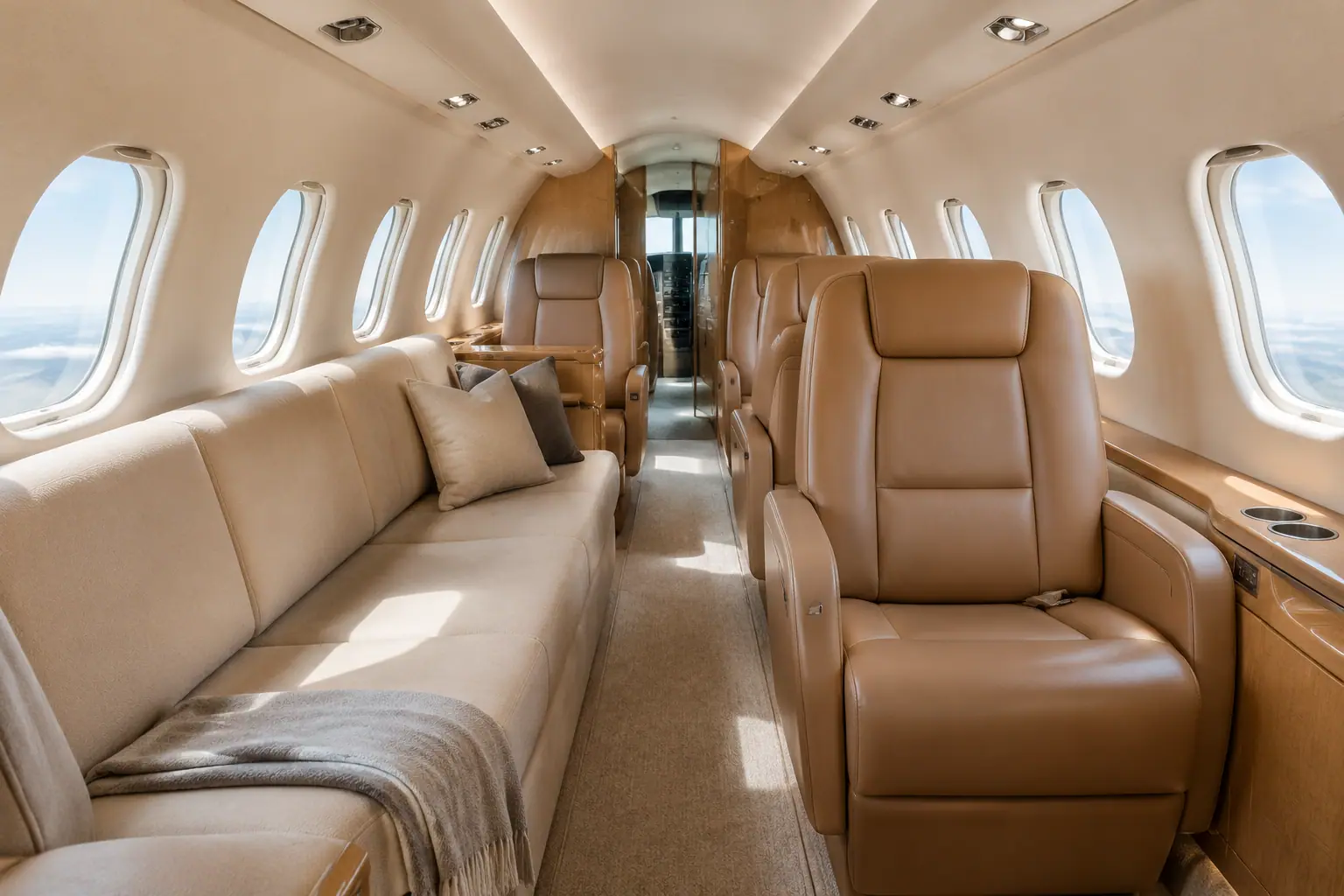
A light jet is the default choice on this 656 nm Denver to Austin leg, because it lands the trip in 1h 54m for an estimated $7,000 to $11,000 and seats five to seven in a true jet cabin. The HondaJet Elite II and Citation CJ4 Gen2 both handle the distance nonstop with room to spare, and their baggage holds cover a normal week's bags.
If your party runs to eight or nine travelers with heavy luggage, then a midsize jet at an estimated $9,500 to $14,500 earns its premium, and the turboprop only makes sense when the budget is tight and the schedule is loose. A super-midsize or heavy jet saves just a few minutes on this route, so pay for cabin, not for speed, unless the whole group wants one large cabin.
For eight or more passengers making the Denver to Austin run, a midsize jet is the practical step up, and its slightly faster cruise trims the flight to 1h 52m. Super-midsize and heavy jets shave only six minutes more over a light jet, so on this distance the extra cost buys space and range, not schedule.
Cessna Citation CJ4 Gen2
- 7 seats
- 451 kt cruise
- 2,165 nm range
Cabin 4 ft 9 in tall, 17 ft 4 in long. Baggage 71 cu ft.
Embraer Phenom 300E
- 7 seats
- 464 kt cruise
- 2,010 nm range
Cabin 4 ft 11 in tall, 17 ft 2 in long. Baggage 84 cu ft.
Leaving Denver
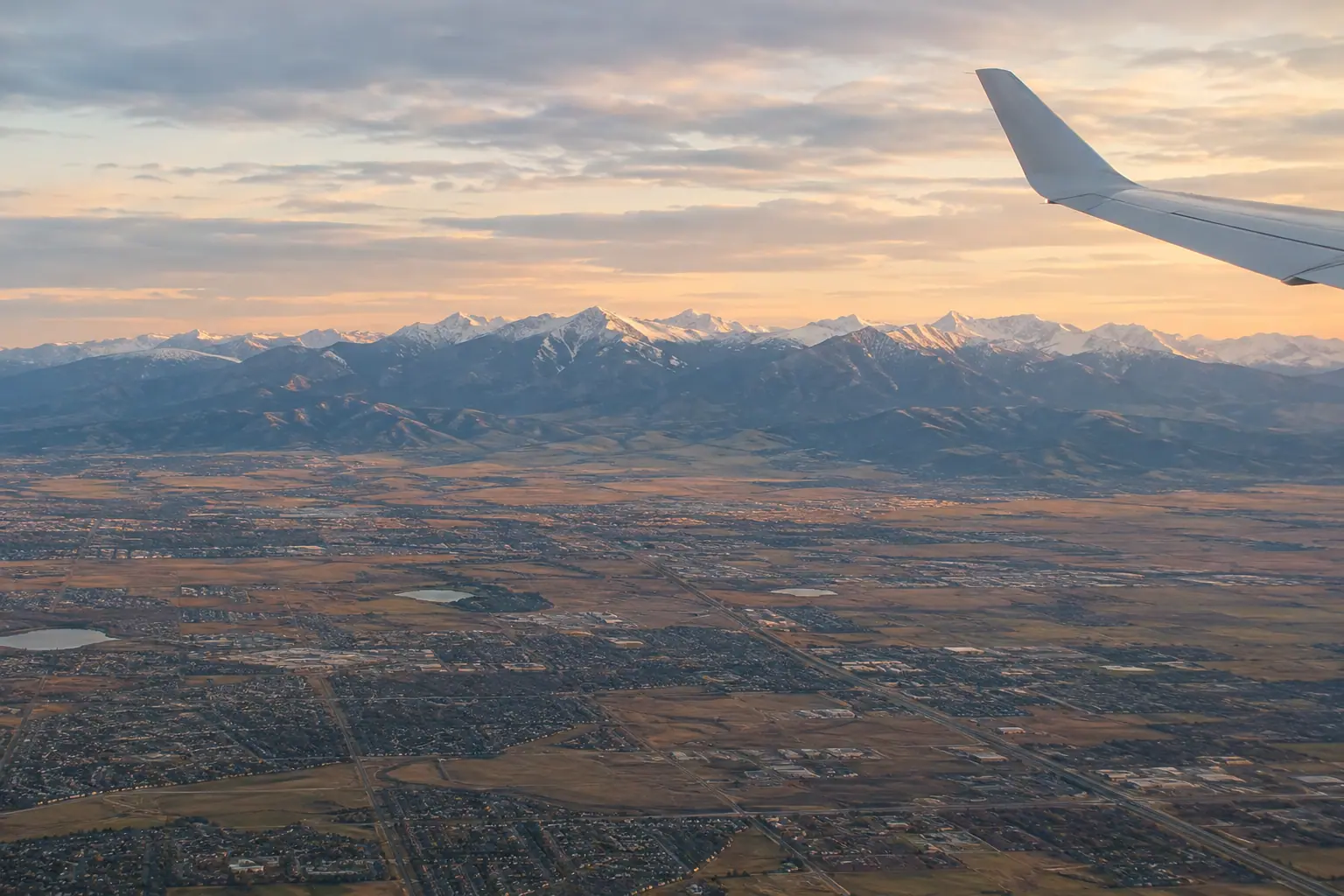
Centennial Airport (KAPA) is the usual private departure point south of Denver, and its 10,001 ft runway handles every class on this list. Denver International (KDEN) works too, with a 16,000 ft runway and more ramp capacity, but the drive east and the terminal-side traffic can eat the time you gained.
If you fly on a hot summer afternoon, then density altitude climbs at both fields, and a light jet may board fewer passengers and bags than the cabin allows. When that happens, the operator will tell you the payload limit before you fly; if the numbers don't work, then a midsize jet with more thrust is the fix.
Arriving in Austin
Austin Executive Airport (KEDC) in Pflugerville has a 6,025 ft runway and suits light and midsize jets, and it lands you north of the city near the tech corridor. Austin Bergstrom (KAUS) has a 12,250 ft runway and sits closer to downtown, South Congress and the hotel strip along the river.
Both are domestic arrivals, so there is no customs stop on a Denver to Austin flight. If your itinerary includes a Canadian or Mexican leg, then CBP processing applies, and the operator builds that time into the schedule; TSA screening rules apply to charter passengers in most cases as well.
| Airport | Ident | Runway |
|---|---|---|
| Centennial Airport | KAPA / APA | 10,001 ft |
| Denver International Airport | KDEN / DEN | 16,000 ft |
| Austin Executive Airport | KEDC | 6,025 ft |
| Austin Bergstrom International Airport | KAUS / AUS | 12,250 ft |
Private jet Denver to Austin prices
Demand builds around Austin's big weekends: spring festival season, Formula One in the fall, and May graduation, when light jet availability tightens and estimates push toward the top of the $7,000 to $11,000 band. Booking two to three weeks out usually secures both aircraft and crew, and same-day round trips lock more easily when the return is fixed early.
If your dates are flexible, then midweek departures in either direction tend to price better than Friday and Sunday. Empty legs are the exception to all of it: a jet repositioning back to Denver may sell well below the one-way estimate, but the times are fixed and there is no guarantee, so ask about them without planning a meeting around one.
A same-day round trip on this route fits inside one duty day, because a light jet needs about 1h 54m each way. If you plan a morning out and evening back, then confirm the return slot at booking so the crew's duty limits and the aircraft's next trip don't collide.
Private jet routes similar to Denver to Austin
These 6 private jet city pairs span 645 to 886 nautical miles, with single-leg light jet estimates ranging from $7,000 to $14,500.
Questions about this route
What does a private jet Denver to Austin cost?
Expect estimates of $7,000 to $11,000 for a light jet one way across 656 nautical miles. Midsize runs about $9,500 to $14,500, super-midsize $12,500 to $17,500 and heavy $17,000 to $25,500. These are planning ranges for the whole aircraft; a firm quote depends on the specific jet, crew and date.
How long is the flight from Denver to Austin by private jet?
A light jet covers the 656 nautical miles in roughly 1h 54m nonstop. The fastest classes, super-midsize and heavy, come in around 1h 46m, and a turboprop takes about 2h 36m. Winds aloft shift those numbers by a few minutes in either direction, so treat them as planning figures.
Can I fly private into Austin Executive instead of Austin Bergstrom?
Yes. Austin Executive (KEDC) in Pflugerville has a 6,025 ft runway and suits light and midsize jets, and it often means a shorter drive to the north metro. Austin Bergstrom (KAUS) has a 12,250 ft runway and sits closer to downtown. Both are domestic arrivals, so no customs stop is involved.
Do I need a jet that can clear the mountains west of Denver?
Not for this route. Standard departure paths from Centennial or Denver International turn east and south, away from the high terrain, and every class listed has the range and climb performance for the trip. On hot days density altitude reduces payload, so the operator may cap passengers or bags.
Is a turboprop cheaper than a light jet on this route?
Barely. The turboprop estimate is $5,500 to $9,000 and the light jet is $7,000 to $11,000, but the turboprop gives up about 40 minutes and cabin comfort. If the budget is tight and the schedule is loose, it can work; otherwise the light jet is the better value on this leg.
Who operates the aircraft on a private jet Denver to Austin?
The flight is flown by an FAA Part 135 operator that holds operational control and provides the crew and maintenance. We work as a DOT Part 295 air charter broker, acting as your agent to source and compare aircraft. TSA screening rules apply to charter passengers in the same way as commercial travel in most cases.