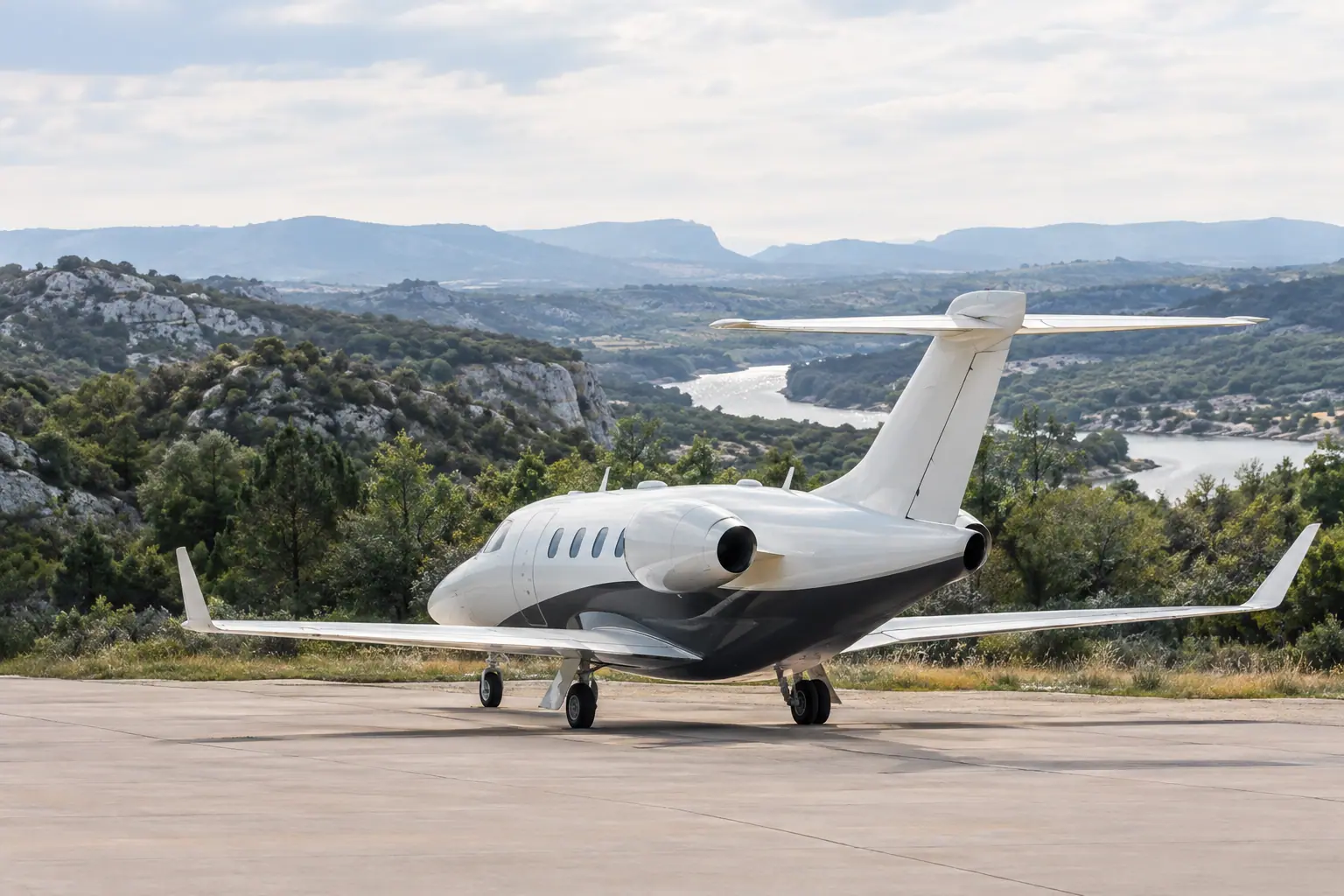
Private jet Phoenix to Austin costs
Private jet Phoenix to Austin covers 764 nautical miles nonstop. A light jet makes the trip in about 2 hours 10 minutes for $8,000 to $12,500. This page explains aircraft, airports, and timing for the route.
- 764 nm879 sm
- 2h 10mlight jet en route
- $8,000–$12,500one-way estimate
Phoenix to Austin private jet prices by aircraft
Flying private from Phoenix to Austin takes 2h 10m on a light jet over 764 nautical miles, with a one-way estimate of $8,000–$12,500.The table below compares turboprops, light jets, midsize, super-midsize, and heavy jets on this 764 nm route. Times are block times in the air; prices are estimates per leg, before taxes and fees. Use the spread as a starting point when you ask for quotes, because the actual operator and date matter more than any baseline figure.
| Aircraft class | Flight time | Est. one-way price | Notes |
|---|---|---|---|
| Turboprop | 2h 58m | $6,500–$10,500 | No stops |
| Light jet | 2h 10m | $8,000–$12,500 | Best fit |
| Midsize jet | 2h 07m | $11,000–$16,500 | No stops |
| Super-midsize jet | 2h 00m | $14,500–$20,000 | No stops |
| Heavy jet | 2h 00m | $19,000–$29,000 | No stops |
Figures are per aircraft, not per seat, quoted before federal excise tax and segment fees. Block time covers taxi, climb and descent.
Why a light jet fits this trip
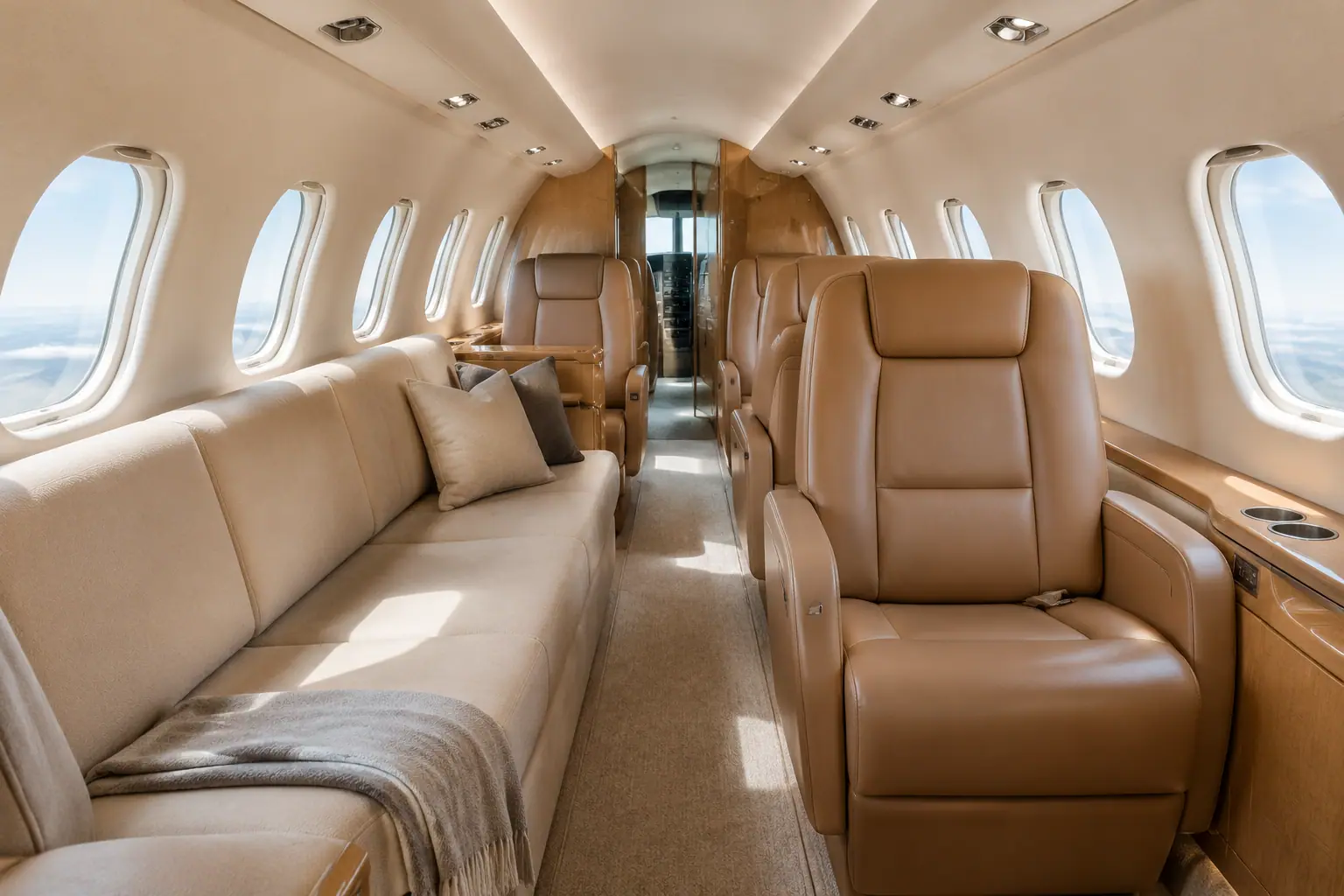
A light jet fits this 764 nm leg almost perfectly. A HondaJet Elite II or Citation CJ4 Gen2 flies it nonstop in roughly two hours ten minutes and burns little enough fuel that quote ranges sit in the $8,000 to $12,500 bracket. Anything larger adds cabin height and baggage room but also adds thousands to the invoice without saving meaningful time. A turboprop stretches the same trip to nearly three hours and gives up cruising altitude, so reserve that class for when the light-jet fleet is genuinely booked.
The alternatives are worth a look when the passenger count or the schedule pushes you up. A midsize jet prices around $11,000 to $16,500 and a super-midsize around $14,500 to $20,000, each shaving only minutes off the light-jet time but offering a stand-up cabin and more luggage space. Heavy jets quote $19,000 to $29,000 and make sense mostly as repositioning or when a group needs the space. For a couple or a small team, the light class stays the sensible default.
Cessna Citation CJ4 Gen2
- 7 seats
- 451 kt cruise
- 2,165 nm range
Cabin 4 ft 9 in tall, 17 ft 4 in long. Baggage 71 cu ft.
Embraer Phenom 300E
- 7 seats
- 464 kt cruise
- 2,010 nm range
Cabin 4 ft 11 in tall, 17 ft 2 in long. Baggage 84 cu ft.
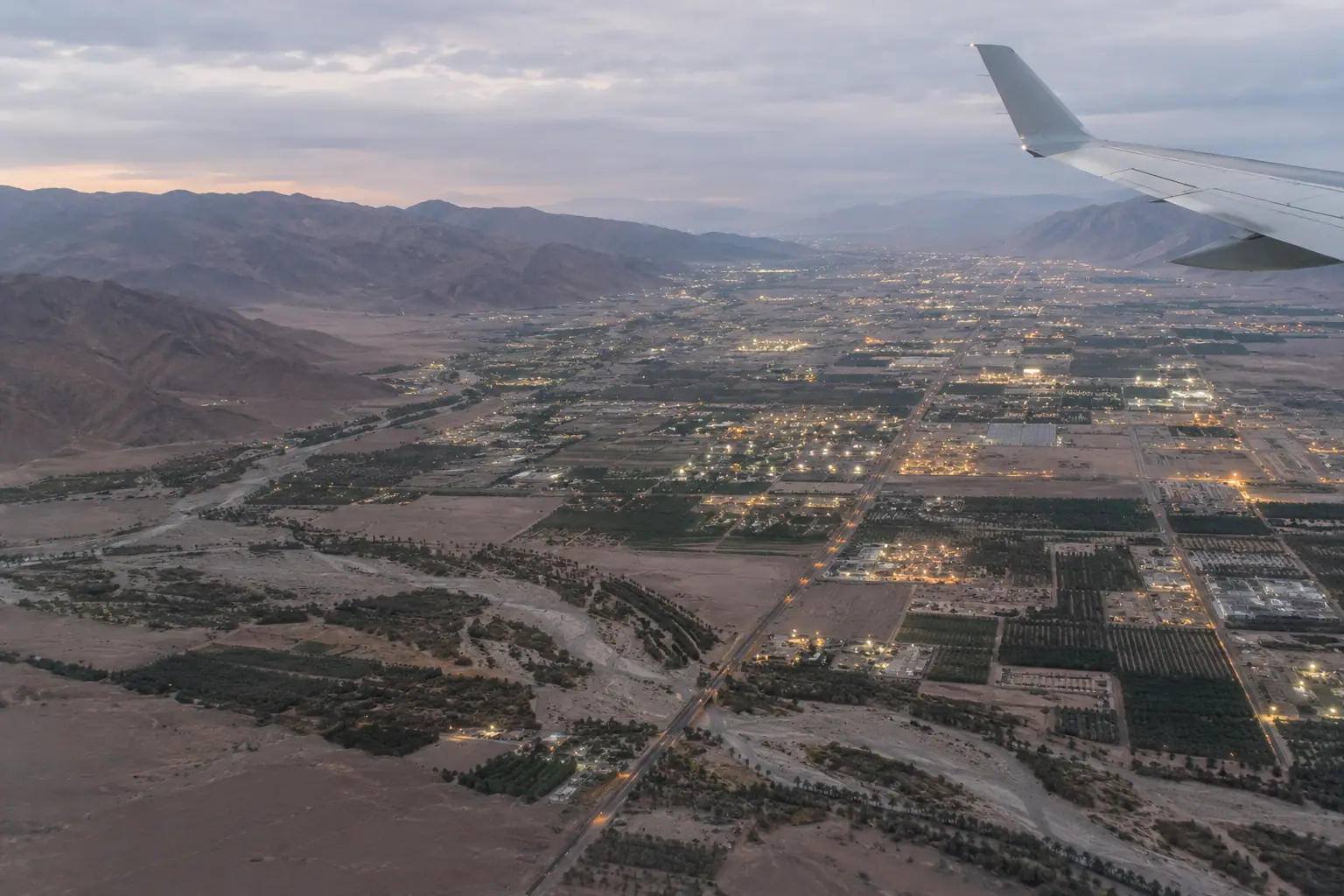
Leaving Phoenix
Phoenix Deer Valley Airport (DVT) is the general aviation field most light jets use on this route. It has an 8,196-foot runway and sits north of the city, which helps if your party starts in Scottsdale or the north valley. Sky Harbor (PHX) has the 11,489-foot runway but its airline traffic means you will share the ramp and the tower with the big carriers. Most passengers choose Deer Valley for a smoother departure and a shorter walk from car to cabin.
Summer heat is the one factor that reshapes the Phoenix end. On very hot afternoons, density altitude can limit how much fuel a light jet can carry out of DVT, which occasionally forces a tech stop or a switch to a larger aircraft. A light jet flying Phoenix to Austin in July may need a fuel stop because of density altitude, so ask the operator about takeoff performance on your date. Morning departures usually avoid the problem entirely.
Arriving in Austin
Austin has two airports that matter for charter: Austin Executive (KEDC) in Pflugerville and Austin Bergstrom (KAUS). KEDC has a 6,025-foot runway and a small, quiet FBO environment that suits light and midsize jets; it puts you about 20 to 25 minutes from downtown in normal traffic. KAUS has the 12,250-foot runway and the airline infrastructure, so it is the better arrival if your ground transport or your onward connection is planned around the main terminal.
The choice matters most on event weekends. During South by Southwest, Formula 1 at Circuit of the Americas, and the spring festival season, the private jet Phoenix to Austin arrival slot at KEDC can tighten first because the field is small. If KEDC is full, KAUS absorbs the traffic, but expect longer taxi times and higher handling fees. Book your arrival airport along with the aircraft rather than deciding later.
| Airport | Ident | Runway |
|---|---|---|
| Phoenix Deer Valley Airport | KDVT / DVT | 8,196 ft |
| Phoenix Sky Harbor International Airport | KPHX / PHX | 11,489 ft |
| Austin Executive Airport | KEDC | 6,025 ft |
| Austin Bergstrom International Airport | KAUS / AUS | 12,250 ft |
When demand and prices peak
Demand on the Phoenix to Austin route runs in two directions: people flying in for Austin events, and people leaving Phoenix for the Texas hill country on weekends. Rates climb when both happen at once, especially during spring festival season and the fall race weekend at Circuit of the Americas. Booking a light jet Phoenix to Austin two to three weeks out usually beats a last-minute quote, because the cheapest aircraft get committed first and the remaining options price higher.
Pricing also moves with the return leg. A one-way quote often reflects an empty repositioning, while a round trip lets the operator keep the same aircraft on both ends and price the pair more efficiently. If your schedule allows a same-day turn, say so when you request quotes; if it does not, plan for an overnight and ask whether the operator will hold the aircraft in Austin or fly it home empty. That single question changes the total more than the choice between two similar light jets.
The FAA Part 135 operators who fly these legs set their own pricing and availability. A broker working under DOT Part 295 rules can compare several of them at once, which is the practical way to see the real spread. On this 764 nm route the spread between a light jet and a heavy jet is large enough that a single quote tells you very little.
Private jet routes similar to Phoenix to Austin
These 6 private jet city pairs span 645 to 886 nautical miles, with single-leg light jet estimates ranging from $7,000 to $14,500.
Questions about this route
How long is a private jet Phoenix to Austin flight?
A light jet covers the 764 nautical miles in about 2 hours 10 minutes nonstop. A midsize jet takes roughly 2 hours 7 minutes, and a super-midsize or heavy jet about 2 hours. A turboprop stretches the same trip to nearly 3 hours. Add taxi time on each end when you plan the door-to-door schedule.
What does a private jet Phoenix to Austin cost?
Light jet estimates run $8,000 to $12,500 per leg. Midsize jets quote $11,000 to $16,500, super-midsize $14,500 to $20,000, and heavy jets $19,000 to $29,000. These are estimates before taxes and fees; the actual number depends on the operator, the date, and whether the aircraft has to reposition.
Which airport do private jets use in Austin?
Austin Executive (KEDC) in Pflugerville is common for light and midsize jets, with a 6,025-foot runway. Austin Bergstrom (KAUS) has a 12,250-foot runway and handles larger aircraft and airline traffic. During event weekends KEDC can fill first, so plan the arrival airport at the same time you choose the aircraft.
Can I fly same-day round trip from Phoenix to Austin?
Yes, and the 764 nm distance makes it practical. A light jet takes about 2 hours 10 minutes each way, so a morning out and an afternoon back leaves a usable day in Austin. Ask the operator to hold the aircraft rather than release it, because that decision affects the price more than the flight time.
How does this compare to flying commercial or driving?
The nonstop flight is roughly two hours in the air, and private terminals cut the airport process to minutes rather than the airline routine. Driving the 879 miles takes well over a day. Commercial nonstops exist but put you back in the security line and the baggage claim. The private option wins on total door-to-door time.
Is a light jet the right choice for private jet Phoenix to Austin?
For most parties of up to seven, yes. Light jets like the HondaJet Elite II and Citation CJ4 Gen2 fly the 764 nm leg nonstop in about 2 hours 10 minutes at $8,000 to $12,500 per leg. Move up to midsize or super-midsize if you need a stand-up cabin or more baggage space; move down to turboprop only if the light fleet is booked.