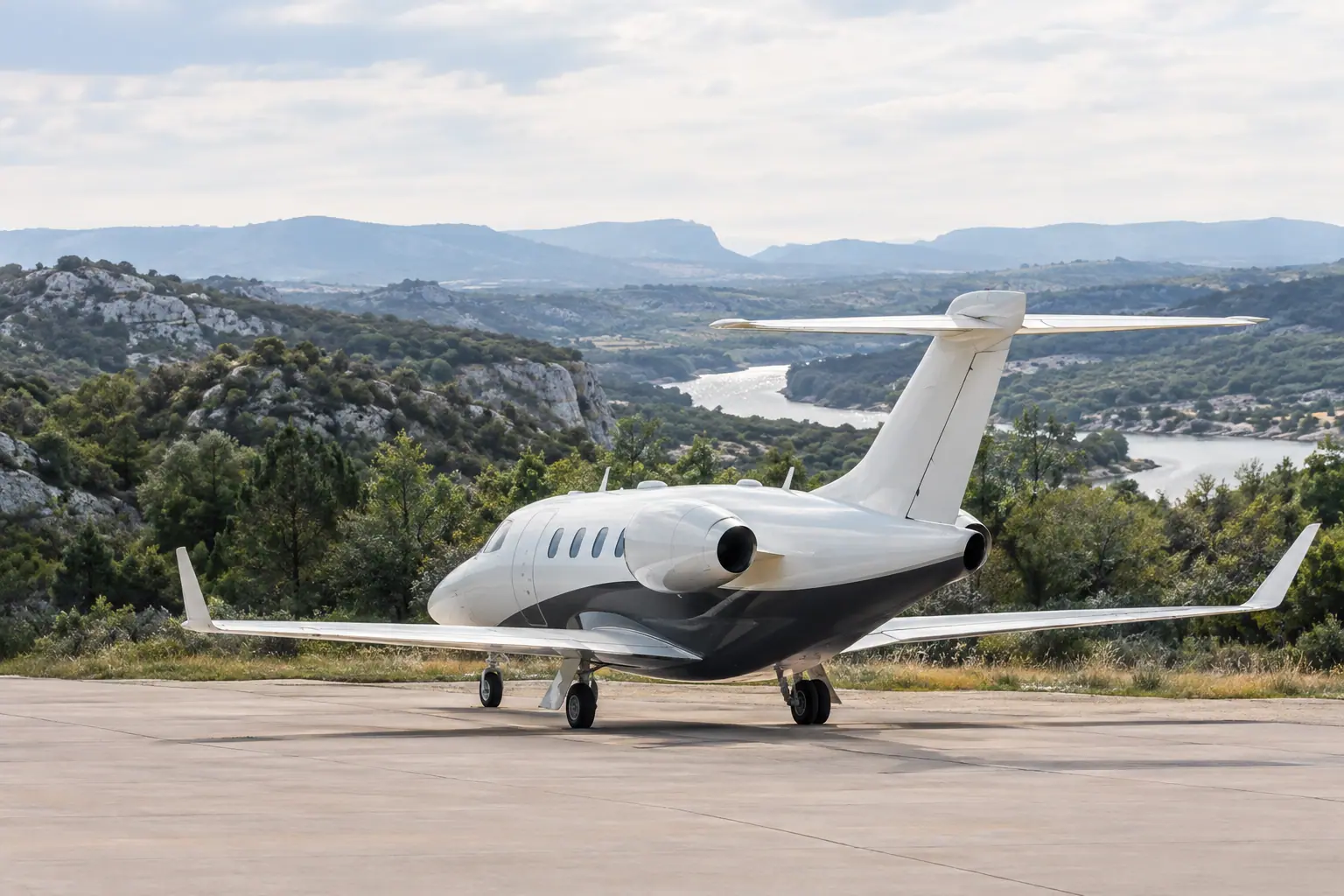
Private Jet Austin to Aspen
A private jet Austin to Aspen covers roughly 700 nautical miles nonstop. Light jets make the trip in about 2h 01m and start near $7,500 one way. Most travelers choose a light or midsize aircraft for this length.
- 700 nm806 sm
- 2h 01mlight jet en route
- $7,500–$11,500one-way estimate
Austin to Aspen private jet prices by aircraft
Flying private from Austin to Aspen takes 2h 01m on a light jet over 700 nautical miles, with a one-way estimate of $7,500–$11,500.Below are estimated one-way charter prices for each cabin class on this route, with nonstop block times. These are planning ranges, not quotes; final pricing depends on the specific aircraft, crew duty rules, date, and how long the jet waits in Aspen. Compare the class columns against your group size and luggage before you commit.
| Aircraft class | Flight time | Est. one-way price | Notes |
|---|---|---|---|
| Turboprop | 2h 45m | $6,000–$9,500 | No stops |
| Light jet | 2h 01m | $7,500–$11,500 | Best fit |
| Midsize jet | 1h 58m | $10,000–$15,500 | No stops |
| Super-midsize jet | 1h 52m | $13,500–$18,500 | No stops |
| Heavy jet | 1h 52m | $17,500–$27,000 | No stops |
Figures are per aircraft, not per seat, quoted before federal excise tax and segment fees. Block time covers taxi, climb and descent.
Why a light jet fits this trip
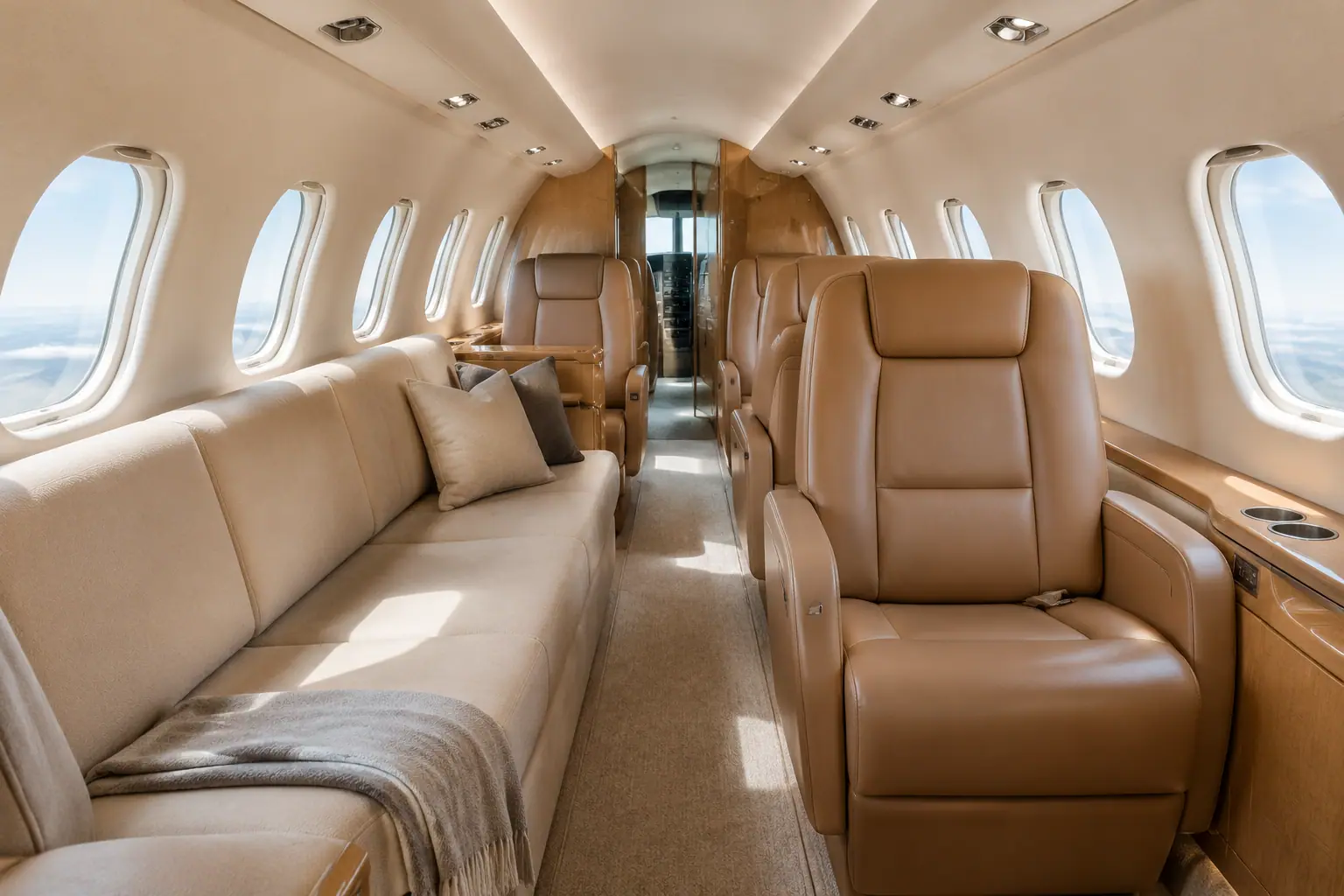
A light jet fits this leg because 700 nautical miles sits comfortably inside the range of both the HondaJet Elite II and the Citation CJ4 Gen2, so you get a nonstop flight in roughly 2h 01m without paying for cabin you do not need. The CJ4 seats up to seven and carries 71 cubic feet of baggage, which covers a ski bag or two per passenger on a typical Aspen trip.
Midsize and super-midsize aircraft shave only a few minutes off the block time, so choose them for cabin height and luggage volume rather than speed. A heavy jet makes sense when your party is large or you want a full stand-up cabin, but expect $17,500 and up one way. A turboprop is the budget option at $6,000 to $9,500, though it flies slower and feels the mountain air more.
Cessna Citation CJ4 Gen2
- 7 seats
- 451 kt cruise
- 2,165 nm range
Cabin 4 ft 9 in tall, 17 ft 4 in long. Baggage 71 cu ft.
Embraer Phenom 300E
- 7 seats
- 464 kt cruise
- 2,010 nm range
Cabin 4 ft 11 in tall, 17 ft 2 in long. Baggage 84 cu ft.
Leaving Austin
Most Austin departures use Austin Executive Airport in Pflugerville, a 6,025-foot runway that handles light and midsize jets well and keeps you out of the commercial terminal traffic. Austin Bergstrom is the alternative when your aircraft type or schedule favors its longer 12,250-foot runway. Your broker will confirm which field the operator prefers once an aircraft is assigned.
Ground time at either Austin airport is short on a private charter because you board at the aircraft rather than through a terminal. Plan to arrive 15 to 20 minutes before departure with ID for each passenger, since operators must verify identities under TSA security programs before the flight.
Arriving in Aspen
Aspen-Pitkin County Airport, Sardy Field, has a single 8,006-foot runway and serves as the arrival point for nearly all charters into the valley. It sits a few minutes from downtown Aspen and the lifts, which is the main reason people fly here rather than land in Eagle or Grand Junction.
Mountain weather and density altitude shape Aspen operations year round, so build slack into your plan. Summer heat and afternoon thunderstorms can push departure weights down, and winter storms can delay arrivals. If your aircraft cannot depart Aspen with a full load under those conditions, the operator may reposition or limit baggage, and your broker should tell you that before you book.
| Airport | Ident | Runway |
|---|---|---|
| Aspen-Pitkin County Airport (Sardy Field) | KASE / ASE | 8,006 ft |
| Austin Executive Airport | KEDC | 6,025 ft |
| Austin Bergstrom International Airport | KAUS / AUS | 12,250 ft |
When this route peaks
Demand on the Austin to Aspen run climbs sharply around the winter holidays and the Christmas-to-New Year window, when ski traffic fills hangar space and aircraft alike. Spring and fall are quieter, and pricing is generally softer outside the ski season and major summer events. If your dates are fixed around a holiday, start the request six to eight weeks out.
Aspen aircraft parking is the real constraint, not the flight itself. If your jet needs to wait in Aspen, overnight ramp space can be scarce and costly in peak weeks, so many itineraries send the aircraft home and bring it back for the return. If you want a same-day round trip, tell your broker early so the operator can plan crew duty and fuel stops. For peak-season flights, booking ahead also widens the pool of light jets available at your price point.
Private jet routes similar to Austin to Aspen
These 6 private jet city pairs span 764 to 1,304 nautical miles, with single-leg light jet estimates ranging from $8,000 to $24,500.
Questions about this route
How long is the private jet Austin to Aspen flight?
A light jet covers the roughly 700 nautical mile leg in about 2h 01m nonstop, while a super-midsize or heavy jet makes it in about 1h 52m. Turboprops take around 2h 45m. Block times assume direct routing and normal winds; winter headwinds and Aspen weather can add time, so plan the day around the arrival window rather than a precise minute.
What does a private jet Austin to Aspen cost?
Estimated one-way charter pricing runs from $7,500 to $11,500 for a light jet, $10,000 to $15,500 for a midsize, $13,500 to $18,500 for a super-midsize, and $17,500 to $27,000 for a heavy jet. A turboprop starts near $6,000. These are planning ranges only; the quote you receive reflects the specific aircraft, date, and Aspen ground costs.
Can I fly nonstop from Austin to Aspen?
Yes. Every class listed here flies nonstop over the 700 nautical miles, including light jets. The HondaJet Elite II has a range of 1,550 nautical miles and the Citation CJ4 Gen2 reaches 2,165, so both have margin for headwinds and alternate routing. Nonstop still depends on Aspen weather minimums at arrival, so a diversion plan should be part of the quote.
Which airport in Aspen do private jets use?
Charters into the valley land at Aspen-Pitkin County Airport, also called Sardy Field, with its 8,006-foot runway. It is the closest field to town and the ski areas. If weather or parking rules keep your aircraft out, your operator may use another regional airport and arrange ground transport, so ask about alternates when you book.
When should I book a private jet Austin to Aspen?
For ski-season dates, especially the Christmas and New Year weeks, start six to eight weeks ahead so light jets and Aspen parking remain available. Off-season trips can often be arranged with a few days notice. If you need a same-day round trip, book earlier still, because crew duty limits and Aspen ramp space constrain those itineraries more than the flight itself.
Who operates and arranges these charter flights?
The flight is operated by an FAA Part 135 charter operator that holds operational control, while the broker arranges the trip as an agent under DOT Part 295 rules. That split matters if something changes: the operator manages crew and aircraft decisions, and the broker handles your booking, contract, and communication. Ask for the operator name before you sign.