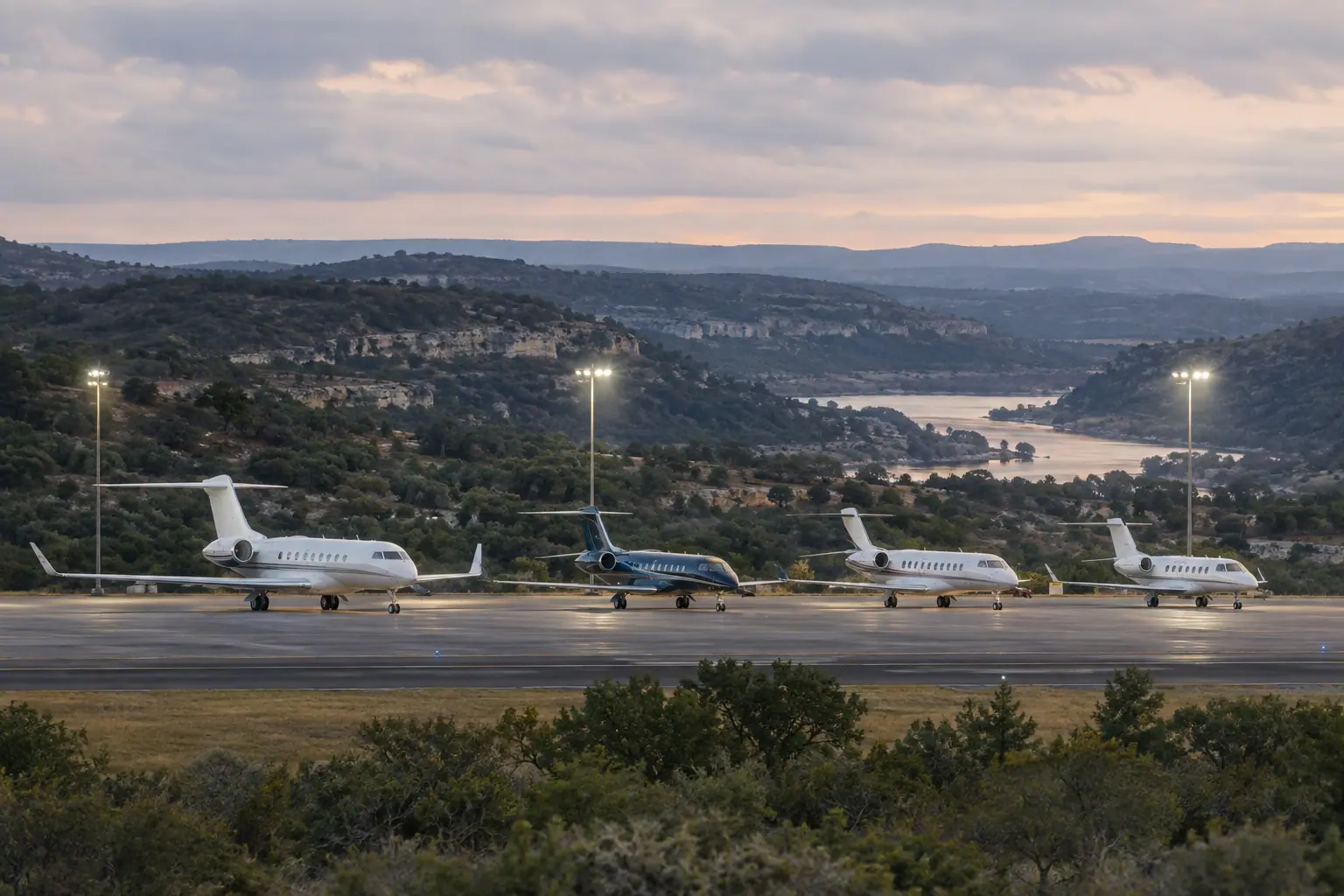
Private jet aircraft Austin
Choosing private jet aircraft in Austin comes down to range, cabin and runway access. A light jet flies the 1084 nm Los Angeles route in 2h 57m. Below are the classes and airframes we place most often here.
- Home
- Jets
Most people start this conversation by naming a destination, not an airplane. Austin sends a lot of flying east to New York and Chicago, west to Los Angeles and San Francisco, and south to Cabo and Nassau, and each of those trips pulls you toward a different airframe. A light jet handles the shorter legs comfortably. Anything past roughly four hours starts to argue for a taller cabin and more range.
The other half of the decision is ground infrastructure. Austin Executive (KEDC) sits close to the north side and has a 6025 ft runway; Austin Bergstrom (KAUS) has 12250 ft and three FBOs. Summer heat matters here more than in most markets, and I'll explain why below.
Turboprop
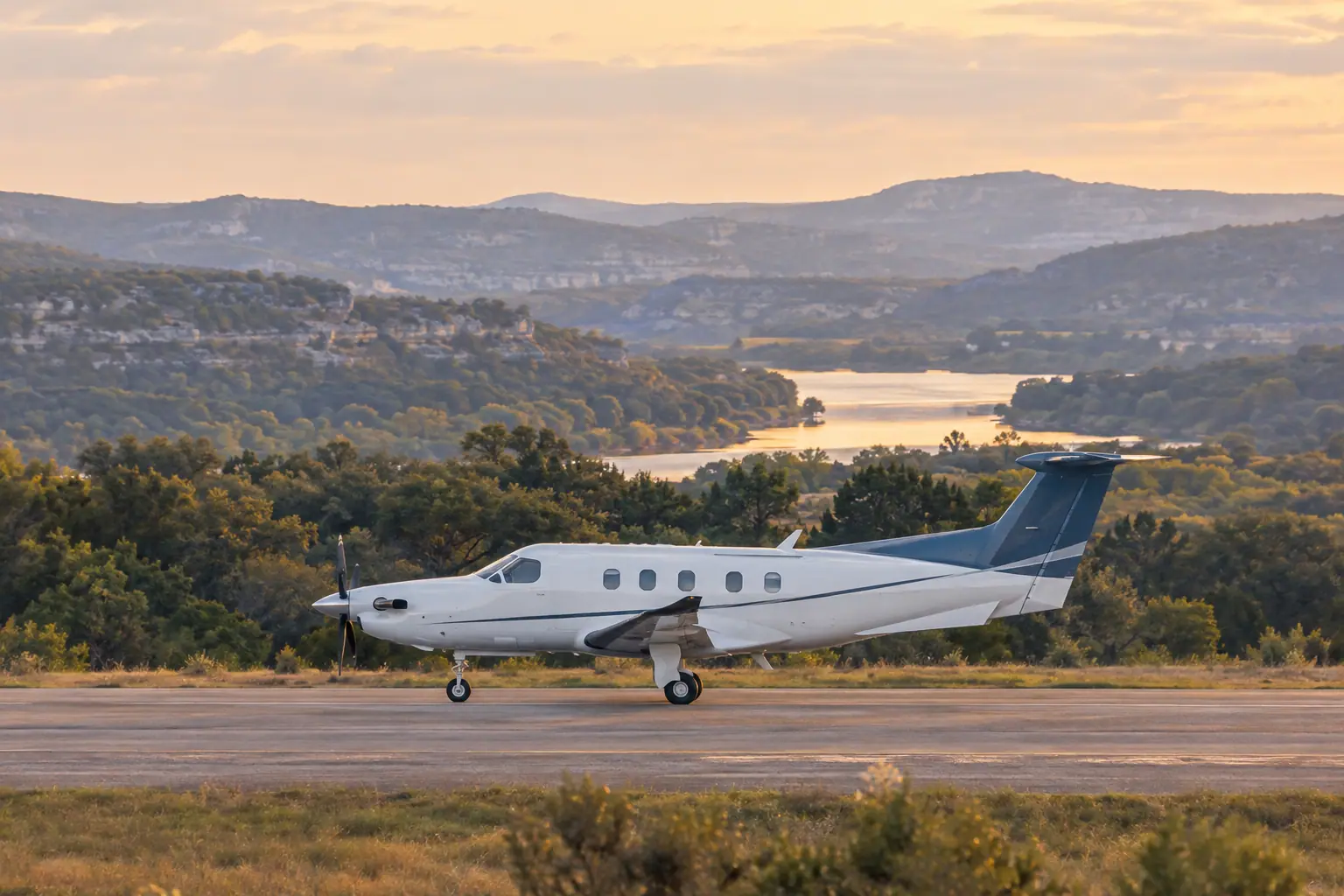
Turboprops run $2200 to $3500 an hour and cruise near 300 kts, which makes them the value play on short Texas legs like the 151 nm hop from Dallas. They also handle shorter strips than most jets. The trade-off is cabin noise and a lower cruise altitude, so if your passengers are working through the flight, look at light jets instead.
Beechcraft King Air 350i
- 8 seats
- 312 kt cruise
- 1,800 nm range
The King Air 350i carries eight at 312 kts with 1800 nm of range, and its 55 cu ft baggage bay swallows more than most light jets. It's a sensible pick for Dallas, Houston and other short Texas legs, and the turboprop economics show up clearly on the invoice.
Pilatus PC-12 NGX
- 6 seats
- 290 kt cruise
- 1,800 nm range
The PC-12 NGX seats six, cruises at 290 kts and reaches 1800 nm. It's the aircraft I suggest when a client wants a single, a short runway and predictable costs, and the 40 cu ft hold is modest, so pack accordingly.
Light jet
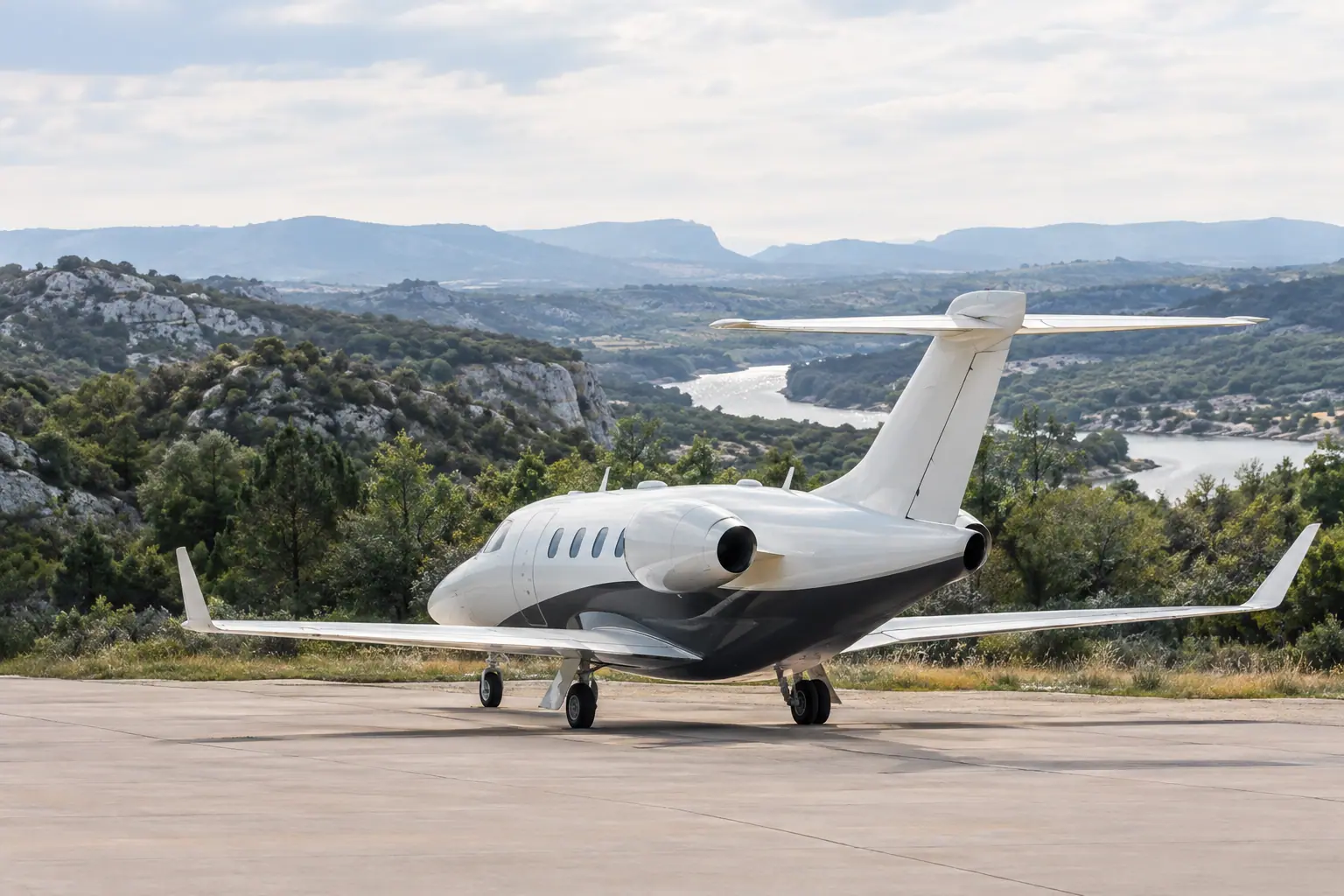
Light jets bill roughly $3800 to $5800 an hour, cruise in the 430 kt range and carry four to seven passengers. They cover most of Austin's domestic map, including the 832 nm Chicago route in 2h 20m. Watch baggage: a full cabin of six with golf clubs or skis can exceed what the hold allows, so tell us the load early.
Cessna Citation CJ4 Gen2
- 7 seats
- 451 kt cruise
- 2,165 nm range
The Citation CJ4 Gen2 carries seven at 451 kts and covers 2165 nm, which puts New York and Los Angeles nonstop within reach. The 71 cu ft hold is generous for a light jet, and it's one of the most requested airframes on this site.
Embraer Phenom 300E
- 7 seats
- 464 kt cruise
- 2,010 nm range
Midsize jet
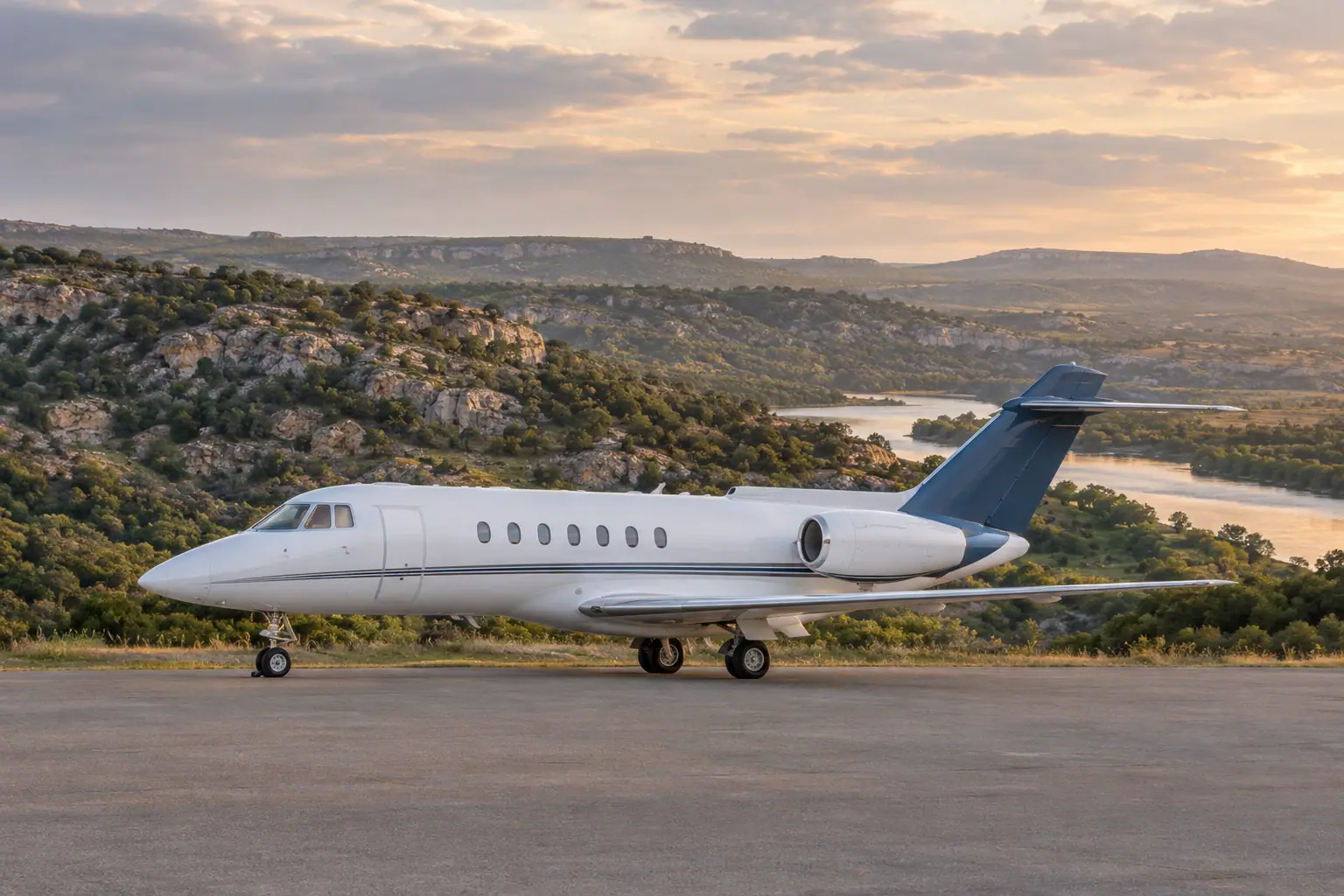
Midsize jets run $5200 to $7800 an hour and give you a stand-up cabin, which is the real dividing line in this category. Eight passengers fit comfortably with luggage. On a 1302 nm New York leg the extra speed and cabin height justify the step up if the flight is longer than about three hours.
Hawker 800XP
- 8 seats
- 447 kt cruise
- 2,540 nm range
The Hawker 800XP seats eight in a 5 ft 9 in cabin, cruises at 447 kts and reaches 2540 nm. It's a workhorse midsize option for Austin to San Francisco or the Northeast, and the 50 cu ft baggage space is the one compromise to plan around.
Cessna Citation XLS+
- 8 seats
- 441 kt cruise
- 2,100 nm range
The Citation XLS+ seats eight, cruises at 441 kts and offers 2100 nm of range with a 90 cu ft hold. That baggage volume is unusually good for the class and matters on family trips or anything involving outdoor gear.
Super-midsize jet
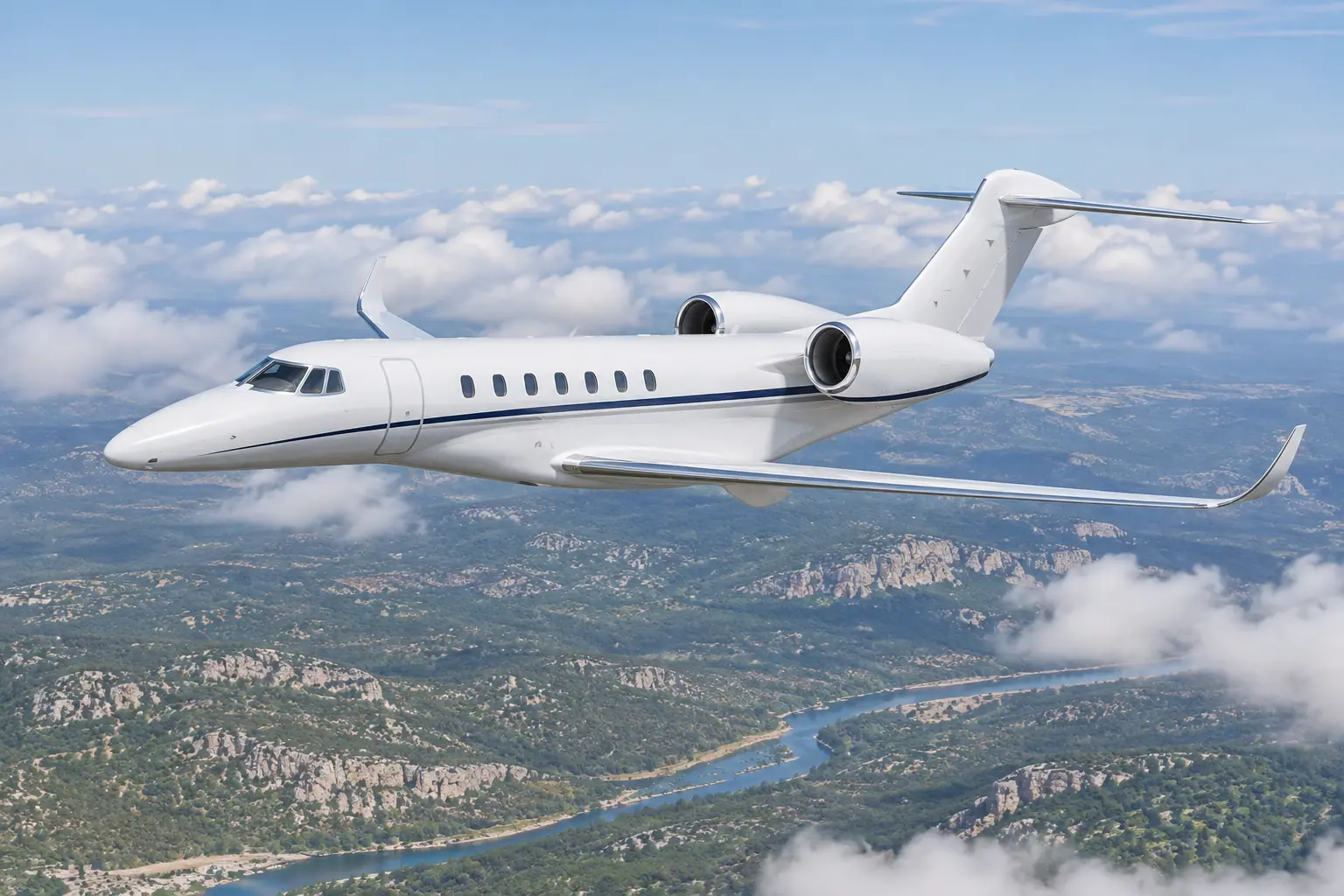
Super-midsize aircraft run $7200 to $10000 an hour, cruise around 470 to 527 kts and reach 3200 to 3600 nm. That covers coast-to-coast nonstop and most of the Caribbean. If you fly Austin to Seattle at 1534 nm with a full cabin, this class keeps you out of a fuel stop.
Gulfstream G280
- 9 seats
- 482 kt cruise
- 3,600 nm range
The Gulfstream G280 seats nine at 482 kts with 3600 nm of range and a 6 ft 3 in cabin. It handles Austin to Seattle or the Caribbean without a stop, and the 154 cu ft baggage bay is the largest in the super-midsize group here.
Cessna Citation X+
- 9 seats
- 527 kt cruise
- 3,460 nm range
The Citation X+ is the fastest airframe on this list at 527 kts, seating nine with 3460 nm of range. On long westward legs the time savings are real, though the 5 ft 8 in cabin is tighter than the G280's.
Heavy jet
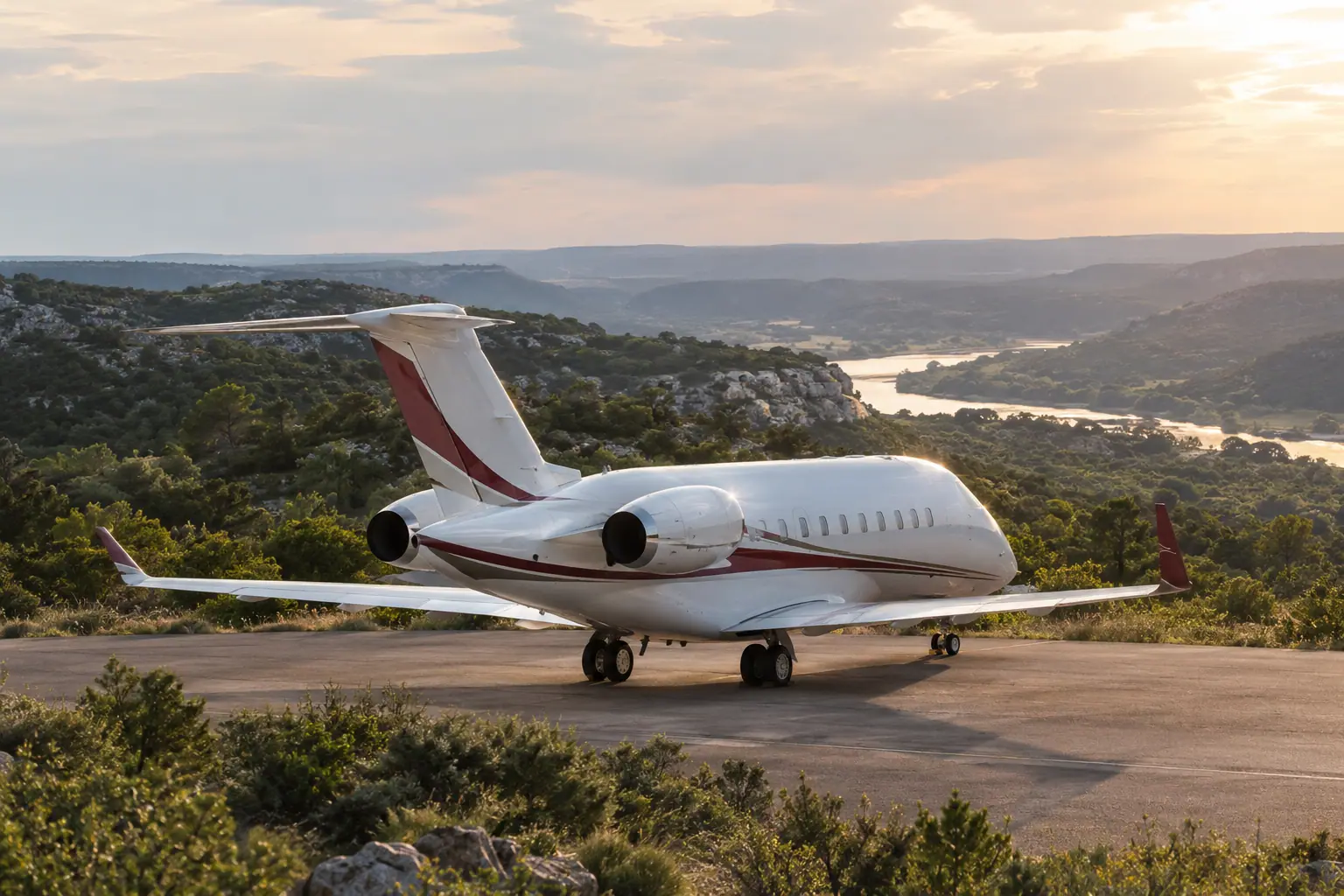
Heavy jets run $9500 to $14500 an hour with cabins over six feet tall and ranges of 4000 nm or more. Twelve passengers travel with real baggage capacity, and transatlantic or deep South America legs become routine. For most Austin domestic trips this class is more airplane than the mission requires.
Bombardier Challenger 650
- 12 seats
- 470 kt cruise
- 4,000 nm range
The Challenger 650 seats twelve in a 6 ft 2 in cabin, cruises at 470 kts and reaches 4000 nm. It's the default for larger groups heading to Europe or deep South America, with 115 cu ft of baggage space behind the cabin.
Dassault Falcon 900LX
- 12 seats
- 459 kt cruise
- 4,750 nm range
The Falcon 900LX carries twelve at 459 kts with 4750 nm of range and the longest cabin here at 33 ft 2 in. Three engines give it access to airports and routes that twins sometimes avoid, and 127 cu ft of baggage covers a full boat.
Choosing private jet aircraft in Austin
Start with the longest leg on your itinerary and work backward. A light jet covers the 1084 nm Los Angeles route in 2h 57m nonstop in Austin, but if your return is Boston at 1453 nm with a full cabin and winter headwinds, the same airframe may need a fuel stop. When the leg pushes past roughly four hours, then the midsize and super-midsize cabins earn their hourly rate in comfort alone.
Then think about the ground. Summer heat raises density altitude across the region, and Austin Executive's 6025 ft runway at 620 ft elevation suits light jets and turboprops on most days, but not every heavy airframe at peak afternoon temperatures. At 115F the peak density altitude at KEDC reaches 3800 ft, which is why we check performance numbers before confirming a hot August departure. If your aircraft needs more runway, then KAUS with its 12250 ft strip is the answer. International returns clear customs at Bergstrom, so build that into the schedule for every southbound Caribbean trip rather than assuming a quiet arrival.
Baggage is the third filter and the one people underestimate. A Citation XLS+ offers 90 cu ft, enough for eight passengers carrying real luggage on a weeklong trip from Austin, while a Hawker 800XP gives you 50 cu ft for the same headcount. Ask yourself what the group is actually carrying before you fall in love with a cabin, because the hold decides more trips than the seats do.
Finally, know who you're dealing with. We act as your agent under DOT Part 295, and the flights themselves are flown by FAA Part 135 operators who hold operational control and their own maintenance and crew standards. That structure is normal for charter brokers, and it means the safety record belongs to the operator, so ask which one is quoting. For any Mexico or Caribbean leg, CBP and the destination country's rules apply to the whole party, and paperwork starts days ahead, not hours. When you compare quotes, then compare operators, not just hourly rates.
Questions
What private jet aircraft in Austin handle a nonstop New York flight?
A light jet like the Citation CJ4 Gen2 covers the 1302 nm New York leg nonstop, and the flight runs about 4h 14m with light jet pricing estimated at $16000 to $24500. Super-midsize and heavy aircraft make the same trip with more cabin comfort and better headwind margins.
Which Austin airport should my flight use?
Austin Executive (KEDC) has a 6025 ft runway at 620 ft elevation, while Austin Bergstrom (KAUS) offers 12250 ft and three FBOs. Light jets and turboprops use either comfortably. Heavier aircraft and international arrivals generally favor KAUS.
Does summer heat affect departures from Austin?
Yes. At 115F the peak density altitude reaches 3800 ft at KEDC and 3700 ft at KAUS, and July figures sit near 3200 and 3100 ft. High density altitude lengthens takeoff rolls and reduces climb performance, so we verify aircraft-specific numbers before confirming a hot afternoon slot.
What does a turboprop cost per hour from Austin?
Turboprops run an estimated $2200 to $3500 an hour, cruise near 300 kts and carry six to eight passengers. On short legs like the 151 nm Dallas route, the lower hourly rate and fuel burn usually beat a jet on total trip cost.
Can I fly nonstop from Austin to the Caribbean?
A super-midsize like the G280 with 3600 nm of range covers Austin to Turks and Caicos at 1455 nm, roughly 4h 36m in a light jet. Nassau at 1114 nm is well within light jet range. Expect CBP processing on the return and plan for it.
How much notice do you need for a charter quote?
Same-day requests are possible on common types, though availability tightens fast. For international legs, customs and permit filings take longer, so a few days helps. Give us passenger count, baggage volume and both airport preferences, and the estimate comes back itemized.
Who operates the aircraft I charter?
FAA Part 135 operators fly the trips and hold operational control, including crew scheduling and maintenance. We arrange the flight as your agent under DOT Part 295 and disclose the operator before you sign. Ask for the operator's certificate and safety history.
What is the range limit for a light jet out of Austin?
Light jets typically reach 1400 to 2165 nm depending on the airframe, so Boston at 1453 nm and Seattle at 1534 nm sit near or past the edge with a full cabin. When range is marginal, then a super-midsize or heavy jet removes the fuel stop.