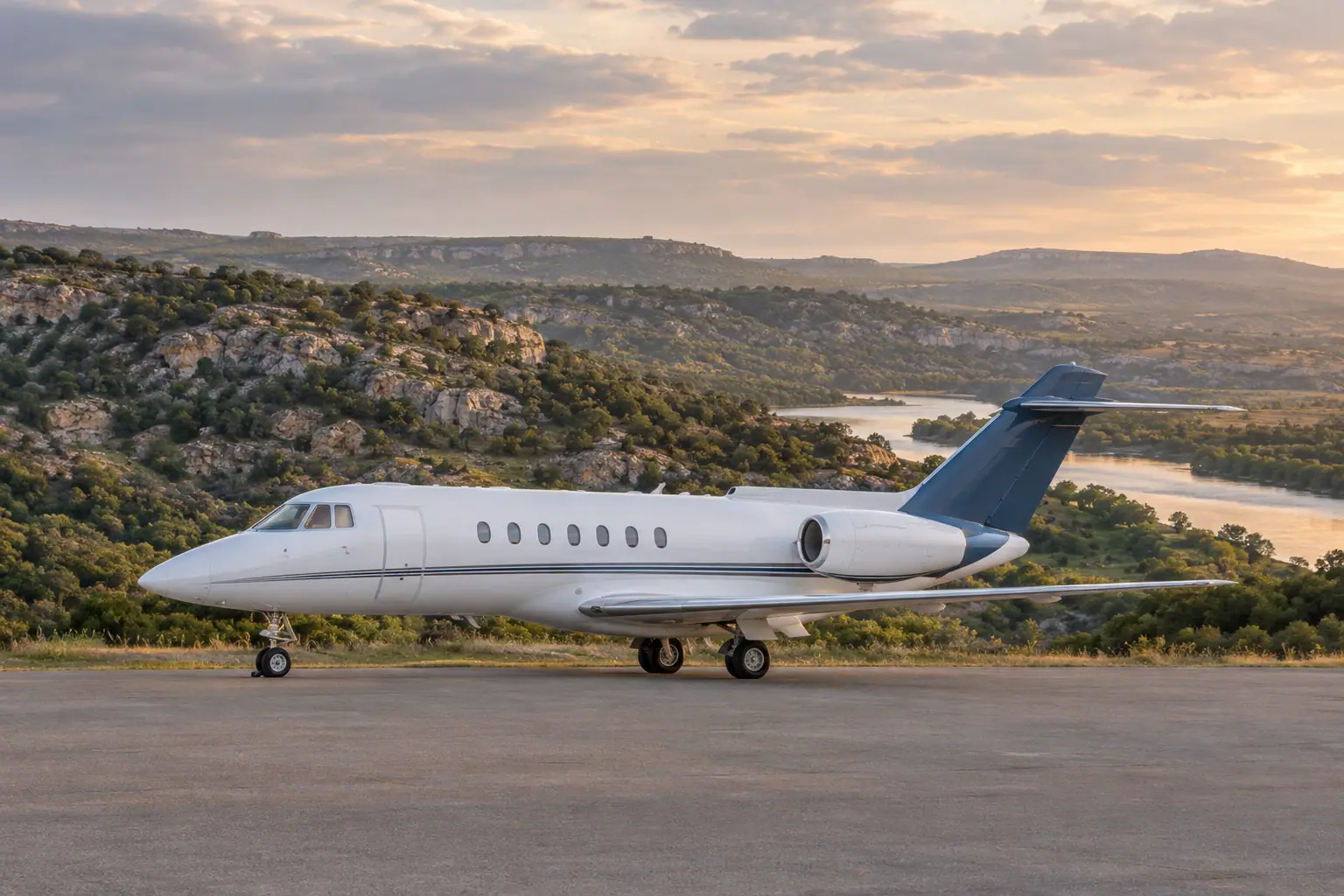
Private jet Austin to San Francisco
Private jet Austin to San Francisco runs 1,304 nautical miles. A midsize jet covers it nonstop in about 3 hours 25 minutes. One-way pricing for that class starts around $17,500.
- 1,304 nm1,501 sm
- 3h 25mmidsize jet en route
- $17,500–$26,500one-way estimate
Austin to San Francisco private jet prices by aircraft
Flying private from Austin to San Francisco takes 3h 25m on a midsize jet over 1,304 nautical miles, with a one-way estimate of $17,500–$26,500.The numbers below come from typical quotes for this leg, not a live inventory feed. Times are block times for the aircraft, and prices are per-leg estimates for the whole cabin, so they do not change with passenger count. Read across the row for the class you are considering and note whether the flight is nonstop.
| Aircraft class | Flight time | Est. one-way price | Notes |
|---|---|---|---|
| Turboprop | 5h 37m | $12,500–$19,500 | Likely tech stop |
| Light jet | 4h 14m | $16,000–$24,500 | Likely tech stop |
| Midsize jet | 3h 25m | $17,500–$26,500 | Best fit |
| Super-midsize jet | 3h 13m | $23,000–$32,000 | No stops |
| Heavy jet | 3h 13m | $30,500–$46,500 | No stops |
Figures are per aircraft, not per seat, quoted before federal excise tax and segment fees. Block time covers taxi, climb and descent.
Why a midsize jet fits this trip
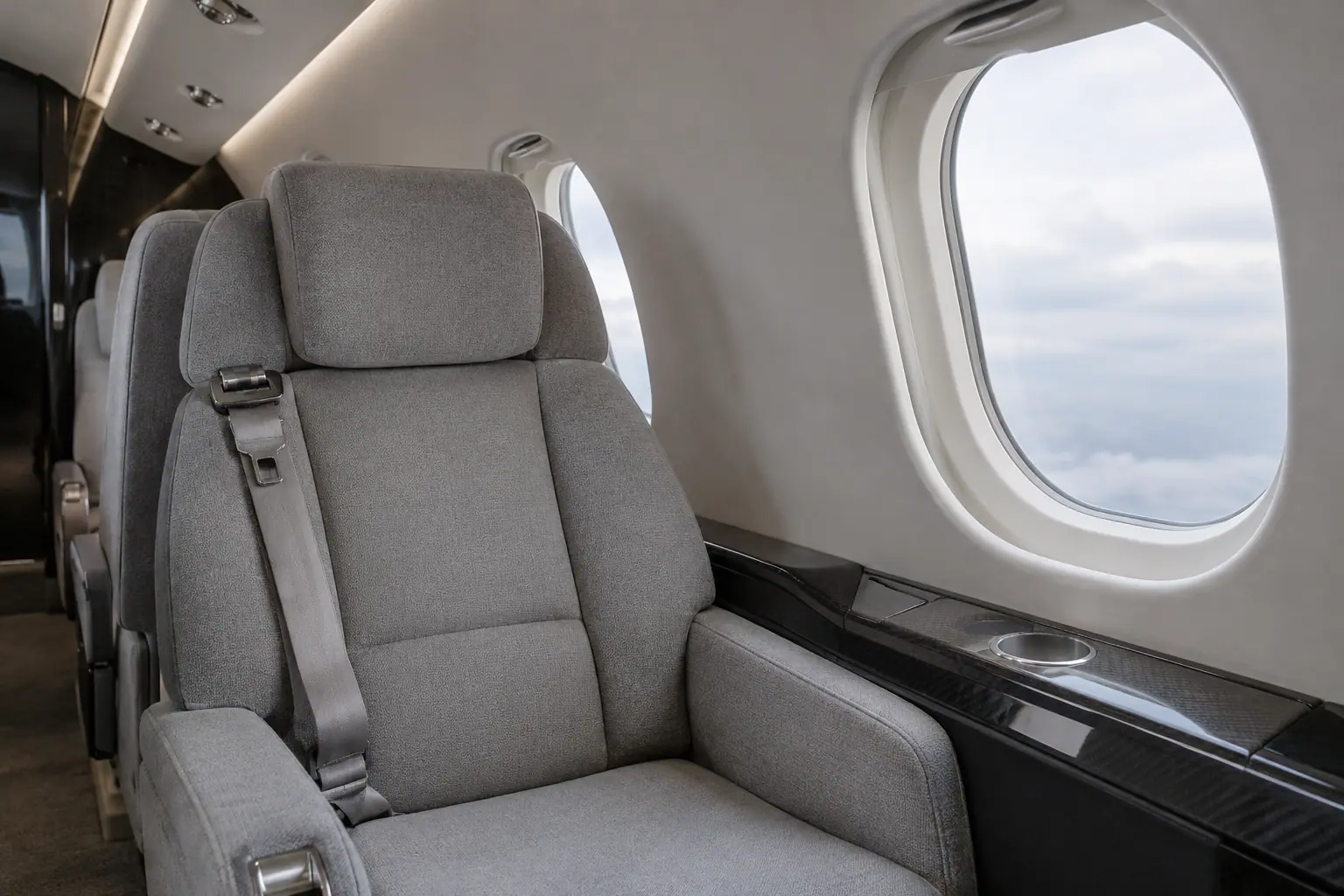
Midsize is the honest recommendation here because 1,304 nautical miles sits at the edge of what light jets do comfortably. A light jet can make the trip, but it often does so with a fuel stop, and the published time for that class is 4 hours 14 minutes against 3 hours 25 minutes in a midsize. For a half-continent leg, that gap matters more than the roughly $1,500 difference at the low end of the price range.
The Hawker 800XP and Citation XLS+ both carry eight passengers and have the range to do this nonstop, which is why they show up on this route so often. If you need to fly at a specific hour, a super-midsize or heavy jet gives you more aircraft to choose from and a slightly shorter cabin experience, at $23,000 and up. Turboprops technically cover the distance, but 5 hours 37 minutes with a stop is a hard sell on a route this long.
Hawker 800XP
- 8 seats
- 447 kt cruise
- 2,540 nm range
Cabin 5 ft 9 in tall, 21 ft 4 in long. Baggage 50 cu ft.
Cessna Citation XLS+
- 8 seats
- 441 kt cruise
- 2,100 nm range
Cabin 5 ft 8 in tall, 18 ft 6 in long. Baggage 90 cu ft.
Choosing your Austin departure point
Austin Executive Airport (KEDC) in Pflugerville has a 6,025-foot runway and handles most of the private charters on this route, while Austin Bergstrom (KAUS) offers a 12,250-foot runway and the airline terminal if your party is arriving on a commercial flight. Which one you use depends on where your passengers start and whether the aircraft type needs the longer strip.
Austin Executive keeps the drive short for most of the metro and avoids the main terminal entirely. Bergstrom is the better choice when someone is connecting in from a scheduled flight or when the operator wants the longer runway for a heavy departure on a warm afternoon. Your broker should confirm the FBO and the ramp fee before you book, since those costs vary by airport.
Arriving in San Francisco
San Francisco International (KSFO) has an 11,870-foot runway and is the closest field to the city, but Oakland (KOAK), with a 10,520-foot strip, is often the faster door-to-door option for travelers headed to the East Bay or the Peninsula. The right airport usually comes down to where your first meeting or hotel actually is.
For a downtown San Francisco arrival, SFO puts you about 15 minutes from the financial district on a normal day. Oakland is the sensible call for Berkeley, Walnut Creek, or anything along the 880 corridor, and the drive across the Bay Bridge can be slow at rush hour. Ask your operator which airport they prefer for the aircraft type before you lock the schedule.
| Airport | Ident | Runway |
|---|---|---|
| San Francisco International Airport | KSFO / SFO | 11,870 ft |
| Oakland San Francisco Bay Airport | KOAK / OAK | 10,520 ft |
| Austin Executive Airport | KEDC | 6,025 ft |
| Austin Bergstrom International Airport | KAUS / AUS | 12,250 ft |
When prices peak on this route
Demand on Austin to San Francisco runs heaviest from Monday through Thursday mornings and again on Friday afternoons, when business travelers are moving in both directions. If your trip is flexible, a midweek midday departure or a Saturday flight usually prices better than a Monday 7 a.m. slot, because operators are positioning aircraft and want to fill the legs.
Book at least two to three weeks out for a specific departure time, and further ahead for heavy jets or for travel around major conferences and the fall tech calendar in the Bay Area. Last-minute bookings are possible, but the available aircraft shrink and the price reflects it. If your dates are fixed, then locking the aircraft early is the single biggest lever on cost. Return-leg and same-day round-trip logic also matter: a round trip booked as one trip is usually cheaper than two one-ways, because the operator avoids an empty return.
Private jet routes similar to Austin to San Francisco
These 6 private jet city pairs span 764 to 1,455 nautical miles, with single-leg midsize jet estimates ranging from $11,000 to $29,500.
Questions about this route
How long is a private jet Austin to San Francisco flight?
A midsize jet covers the 1,304 nautical miles in about 3 hours 25 minutes nonstop. A super-midsize or heavy jet trims that to roughly 3 hours 13 minutes, while a light jet takes about 4 hours 14 minutes and often includes a fuel stop. Turboprops are slower still at 5 hours 37 minutes, so most travelers on this route choose midsize or larger. For a half-continent leg, the time savings of a midsize jet usually outweigh the higher hourly cost.
What does a private jet Austin to San Francisco cost?
Midsize jets on this leg typically quote between $17,500 and $26,500 one way, and super-midsize runs $23,000 to $32,000. Heavy jets start around $30,500 and can reach $46,500. These are estimates for the whole aircraft, not per seat, and they move with aircraft availability, crew time, and whether the return leg is empty. If your dates are flexible, then shifting by a day can drop the quote by thousands on this route.
Which airports serve private jet Austin to San Francisco flights?
On the Austin end, most charters use Austin Executive (KEDC) with its 6,025-foot runway, or Austin Bergstrom (KAUS) with 12,250 feet. In the Bay Area, San Francisco International (KSFO) has an 11,870-foot runway and Oakland (KOAK) has 10,520 feet. Your choice usually depends on where you start in Austin and where you need to be in the Bay Area. Oakland often saves time for East Bay destinations, while SFO is closer to downtown San Francisco.
Can I book a same-day round trip from Austin to San Francisco?
Yes, but plan for a long day: 3 hours 25 minutes each way in a midsize jet plus ground time leaves little margin. A same-day round trip is usually priced as a round trip rather than two one-ways, which can save money, but the crew duty limits and the return slot need to be confirmed at booking. If your meeting runs long, then the return may need to move, so build in a buffer.
Is a light jet enough for the Austin to San Francisco route?
A light jet can fly the 1,304 nautical miles, but often with a fuel stop, and the quoted time is about 4 hours 14 minutes. Midsize aircraft like the Hawker 800XP and Citation XLS+ make it nonstop in 3 hours 25 minutes with eight passengers. For this distance, the extra speed and range of a midsize usually justify the modest price difference. When you need a specific arrival time, a nonstop midsize removes the risk of a fuel stop delay.
Who operates private jet Austin to San Francisco flights?
Flights are flown by independent FAA Part 135 operators who hold operational control of the aircraft, and your broker arranges the trip as an agent under DOT Part 295 rules. That means the operator, not the broker, is responsible for crew, maintenance, and safety. Ask for the operator's name and certificate before you book, and confirm the tail number a day ahead. For international connections beyond San Francisco, CBP clearance applies at the first U.S. port of entry.